Plate Loaded Adjustable Dumbbells: Quiet 2.5 Lb Jumps at Home
By Lila Menon • 17th Sep
Quick answer
Yes—plate-loaded adjustable dumbbells can create 2.5-lb-per-dumbbell jumps by adding one compatible 2.5-lb plate to each handle. The pair’s combined load increases by 5 lb, not 2.5 lb.
- Key distinction: The smaller increment can support measured progression, but it is not proven universally better than larger jumps. The useful advantage is user-chosen loading.
- Check before loading: Verify the plate bore, sleeve dimensions, usable sleeve length, collar fit, and handle capacity. Follow the locking instructions for your exact handle and collar before lifting.
- Noise caveat: The evidence does not show that plate-loaded dumbbells are quiet or quieter than selectorized designs. Treat apartment-friendly noise as something to test in your own room, not a product-style guarantee.
Plate loaded adjustable dumbbells can make small, deliberate loading changes possible: add one 2.5 lb plate to each dumbbell and each hand is working with 2.5 lb more. That is the useful arithmetic behind 2.5 lb weight increments, not a 2.5 lb increase across the whole pair, which would be incorrect. For home strength training, that precision can be appealing when a larger jump changes your form, grip tension, or confidence before it improves your training.
One important boundary: a plate-loaded setup is not automatically quiet. For broader context on real-world equipment noise, see this adjustable dumbbell noise comparison. There is no sound-level, vibration, or floor-impact evidence that shows plate-loaded adjustable dumbbells are quiet, or quieter than selectorized designs. If you train in a shared building, treat quietness as a requirement to investigate with your own setup, not a promise attached to the loading style.
What are plate-loaded adjustable dumbbells?
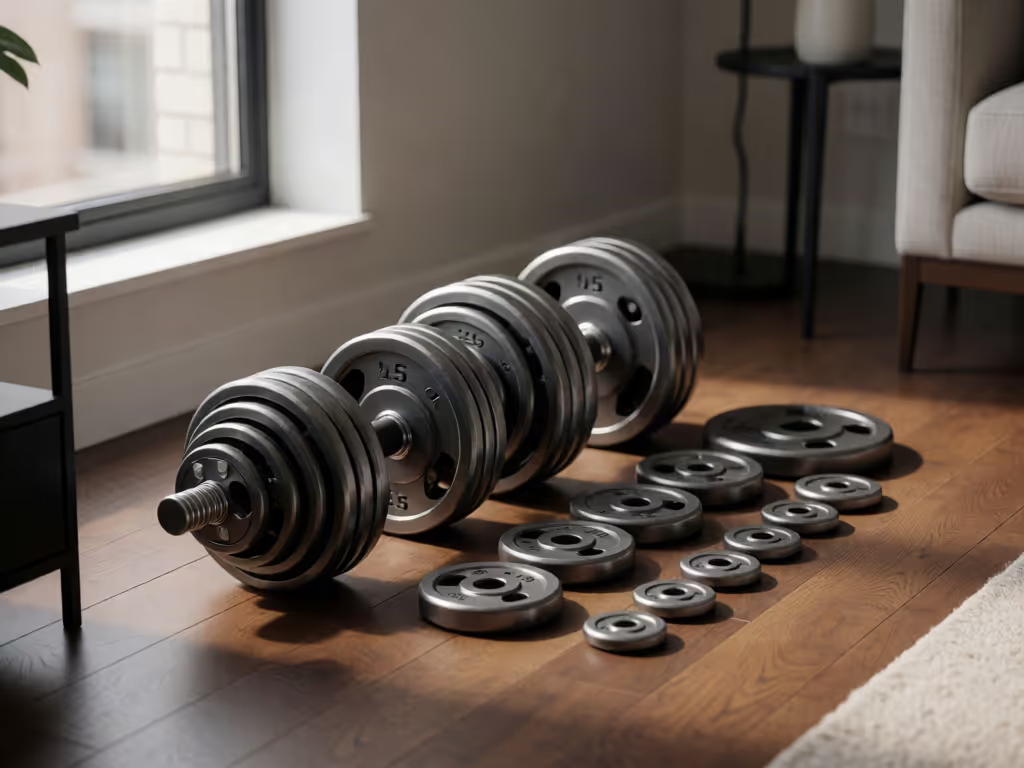
They are dumbbell handles with loadable sleeves. You manually add or remove plates, then retain the plates with a collar or a spin-lock mechanism. The appeal is straightforward: the handle accepts the plates you choose, so the available jumps are shaped by the plates that fit your specific equipment.
That flexibility is different from a fixed-increment system. With plate loading, the question is less "What jumps did the manufacturer choose?" and more "What can this handle safely accept, and what plate sizes fit without making the bell awkward?"
For an apartment lifter, that second question matters. A small numerical jump is only useful if the loaded dumbbell still feels predictable in your hand. Keep your wrist stacked, let the handle sit deep and centered in the palm, and notice whether you are squeezing harder merely to stop the bell from feeling busy. The goal is grip calm, not a white-knuckle workaround. Handle shape, grip pressure, and weight distribution can all affect that experience; our wrist-safe handle comparison explores those ergonomic differences in more detail.
Can you create 2.5 lb weight increments with plates?
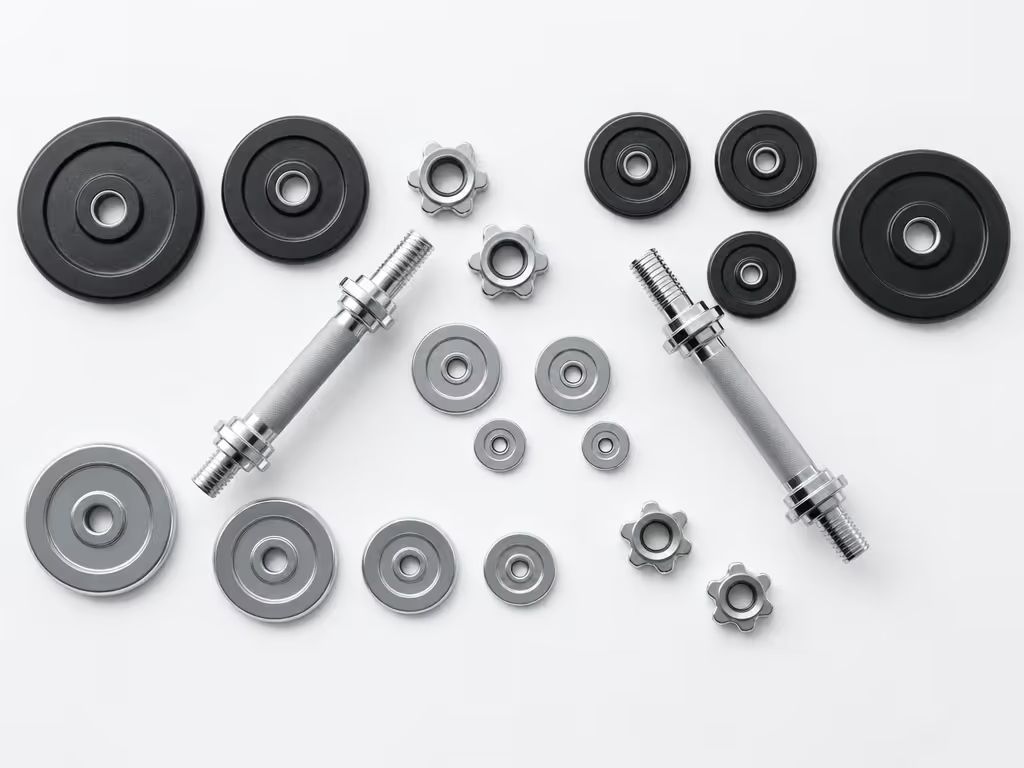
Yes, if the plate, handle, sleeve, collar, and rated capacity are compatible. One 2.5 lb plate placed on each dumbbell raises the load of each dumbbell by 2.5 lb. Across two dumbbells, the combined load rises by 5 lb.
Here is the simple loading math:
- Current load: 20 lb per dumbbell
- Add: one 2.5 lb plate to each dumbbell
- New load: 22.5 lb per dumbbell
- Total increase across the pair: 5 lb
That distinction is especially useful for unilateral movements. A curl, press, or row does not care about the combined weight of both bells; each arm experiences its own dumbbell.
Fractional plate systems are available in sizes from 0.25 lb through 2.5 lb. One example of a 2.5 lb fractional plate is listed with a 2-inch inside diameter, a 7-inch outside diameter, and 0.75-inch thickness. Those measurements illustrate why "Olympic-style" is not enough information to assume a fit. A 2-inch-bore plate may be intended for Olympic bars, but you still need to check your exact dumbbell's sleeve diameter, usable sleeve length, collar fit, and stated capacity before loading it.
Why a 2.5 lb jump can feel meaningful
A 2.5 lb increase is not proven to be universally superior to a larger increase. It is simply a smaller next step. That can be useful when you want to progress without turning a controlled working set into a compensatory one.
Use the jump as a form check rather than a test of toughness:
- Warm up with the current load.
- Add the small plate only when your usual reps remain steady and unhurried.
- Film one set from the side or front if an elbow, wrist, or shoulder has been feeling irritable.
- Watch for a wrist that bends back, a shoulder that rolls forward, or a grip that visibly clamps down.
- If the new load changes your position, stay at the earlier load and build another clean session.
I learned to pay attention to that last point after a rattly handle coincided with a stubborn elbow flare during a week of naptime training. A slightly fuller, well-cut grip changed more than comfort; it changed how much tension I carried into every rep. Comfort that keeps you consistent is performance in disguise.
Are quick lock adjustable dumbbells better for fast transitions?
Not automatically. Plate-loaded designs require manual plate changes. The collected evidence does not include representative independent testing of quick lock adjustable dumbbells against plate-loaded designs for adjustment time, durability, balance, or reliability.
Plate-loaded designs require manual plate changes. That may suit a session with a few planned exercises and longer blocks at one load. It may be less appealing if your training depends on rapid changes between multiple weights. Rather than assuming either style will preserve your workout flow, map your actual session first:
- How many distinct loads do you use in one workout?
- Do both dumbbells need the same load?
- Will you change weight between exercises or between sets?
- Can you lay out plates and collars without making your shared space feel chaotic?
The same practical test applies to noise anxiety. Do not buy on a "quiet" label alone. The available evidence does not provide decibel readings, vibration testing, or comparisons across concrete and wood floors. A controlled, non-dropped training style may fit your household better than late-night maximal efforts, but you will need to assess the sound and feel in your own room.
Do longer plate-loaded handles affect exercise comfort?
They can be worth scrutinizing. One manufacturer has stated that longer plate-loaded handles may reduce balance and control, and that the securing mechanisms it describes may loosen over time, particularly after drops. That is a manufacturer's claim, not broad independent comparative proof, but it identifies a sensible hands-on check.
Before committing to a loading arrangement, evaluate it in the positions you actually train:
- At your sides: Does either end of the dumbbell feel as though it pulls your wrist off center?
- At the top of a curl: Does the plate stack crowd your shoulder or force you to alter the path?
- In a floor press: Can you keep the wrist over the forearm without fighting the handle length?
- In a row: Does the bell remain composed through the bottom position, without you gripping harder to manage its swing?
Then follow your handle and collar manufacturer's locking instructions before lifting. Regular cleaning, storage, and troubleshooting also help preserve reliable operation; see our guide to caring for adjustable dumbbells. Titan Fitness advises users of its adjustable dumbbell sets to ensure the set is securely locked before each lift. The collected evidence does not establish a universal tightening method, inspection checklist, or drop-safety rule, so follow the instructions for your exact handle and collar.
Is a plate-loaded setup worth it for home strength training?
It can be worth exploring if the value you want is adjustable resistance with user-chosen loading steps. Progressive resistance training is recommended for healthy adults, and general guidelines commonly call for muscle-strengthening work involving all major muscle groups on two or more days per week. A small-plate approach can support that broader practice by letting you make a measured change when your current load no longer challenges you cleanly. Before increasing the load, review the fundamentals of adjustable dumbbell safety, including secure adjustments and appropriate weight selection.
But it is not a universal answer. A plate-loaded setup may be a poor fit if changing plates interrupts the way you train, if your available plates make the handle too long or unbalanced, or if the hardware does not inspire confidence. It is also not a verified solution to apartment noise. Your floor, building, movement choices, and handling habits remain central.
The best progression-friendly weight jumps are the ones you can load securely, control with clean alignment, and repeat next week.
FAQ
How do I add 2.5 lbs to a dumbbell?
If a 2.5 lb plate fits your specific dumbbell handle and can be safely accommodated, add it to the loadable sleeve and secure the weights with the handle's collar or spin-lock mechanism. Repeat on the other dumbbell if you want both bells to increase by 2.5 lb. Verify plate bore, sleeve dimensions, available sleeve length, collar fit, and the handle's rated capacity first.
What weight increments do adjustable dumbbells use?
It depends on the system. With plate-loaded adjustable dumbbells, increments depend on the plates you own and can safely use. Fractional plates are offered in sizes from 0.25 lb to 2.5 lb.
How often should I use dumbbells?
For healthy adults, general guidelines commonly call for muscle-strengthening activities involving all major muscle groups on two or more days each week. That is broad guidance, not a personal program. Let recovery, exercise selection, technique quality, and your schedule shape the details.
Is there a downside to adjustable dumbbells?
For plate-loaded adjustable dumbbells, practical considerations include manual plate changes and the need to verify compatibility among the plates, handle, sleeve, and collar. One manufacturer states that longer plate-loaded handles can reduce balance and control, but the collected evidence does not establish that concern across models through broad independent testing. Follow the locking instructions for your particular handle and collar before lifting. The right decision comes from your movements and space, not from a universal "best" label.
Take the next step: test the system, not the hype
If small jumps are the attraction, begin with a calm audit: identify your handle type, measure what can fit on the sleeve, confirm the rated capacity, and choose a compatible loading plan. Then test a 2.5 lb-per-dumbbell change on one familiar movement at a controlled effort.
Pay attention to wrist alignment, handle balance, and the amount of unnecessary tension in your hands. That is the data that matters in a real home routine. When gear helps your body settle into repeatable reps, and fits the people sleeping or living nearby, you have built something more valuable than a clever increment: a routine you can keep.
Related Articles