Machine to Dumbbell Exercise Conversions for Home Gyms
By Rowan Takahashi • 1st Sep
What to do
Machine-to-dumbbell conversions are not reliable weight calculations. Map the gym exercise to a movement pattern, choose a controlled dumbbell variation, and progress from repeatable technique rather than the machine-stack number.
- Start with: Classify the work as squat, hinge, lunge, push, pull, or carry.
- Then: Begin conservatively and log reps, sets, load, and technique. Increase resistance only when performance stays controlled; added reps, sets, density, or complexity can also drive progress.
- Important prerequisite: Treat alternatives as pattern-level options, not identical replacements. A dumbbell row does not recreate a lat pulldown, and the available guidance does not provide a validated formula for converting machine, barbell, or dumbbell loads.
Important: General guidance such as two to four sets of eight to 12 repetitions, two to three times weekly, is a starting framework rather than an individualized prescription.
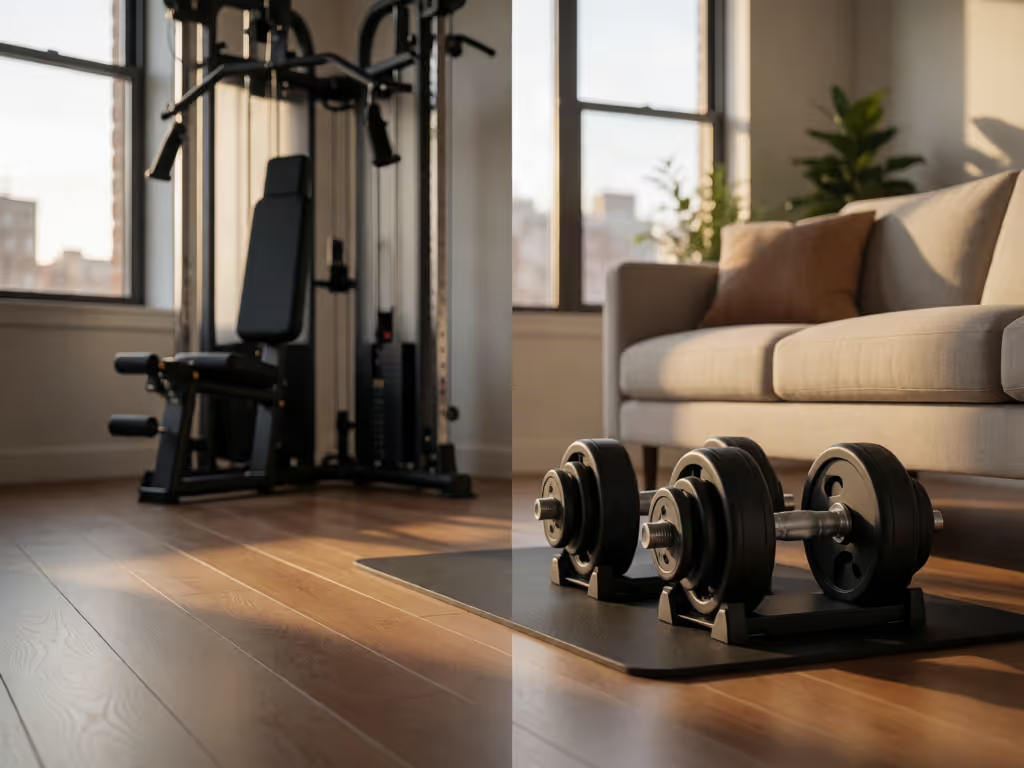
Machine to dumbbell exercise conversions work best when you stop treating them as weight-stack math. The practical goal of home dumbbell alternatives to gym machines is to preserve the movement pattern you trained at the gym, then rebuild it with controlled reps and a loading plan that fits your space. A 100-pound selectorized stack does not translate reliably to a particular dumbbell number. A broad movement-pattern match does not establish identical mechanics, range of motion, stability demands, or muscle stimulus.
For apartment training, that is useful news. For a practical exercise library that applies these movement patterns, see our adjustable dumbbell exercise guide. You do not need a fake conversion calculator; you need exercise movement pattern mapping and a repeatable way to progress. Quiet strength is measured, not guessed, set after set.
FAQ: Why can't I convert a machine weight directly to dumbbells?
Because the number on a machine is only one part of the resistance. A movement matched broadly to a dumbbell exercise is not necessarily mechanically identical. That can alter how a movement feels even when the listed load appears similar.
So skip rules such as "divide the stack weight in half" or "two dumbbells equal the machine number." The available guidance does not provide a validated fixed formula for cable stacks, chest-press machines, leg presses, or other machine loads.
Use this control condition instead:
- Identify the movement pattern rather than the machine label.
- Choose a dumbbell movement in that pattern that you can perform with consistent technique.
- Start conservatively rather than guessing from your old machine setting.
- Progress only after reps remain controlled and repeatable.
That last point matters more than ego arithmetic. NASM's progression guidance includes adding resistance after consistent technique is established, but it also recognizes added repetitions, sets, training density, and exercise complexity as valid ways to advance.
FAQ: What movement patterns should replace gym machines?
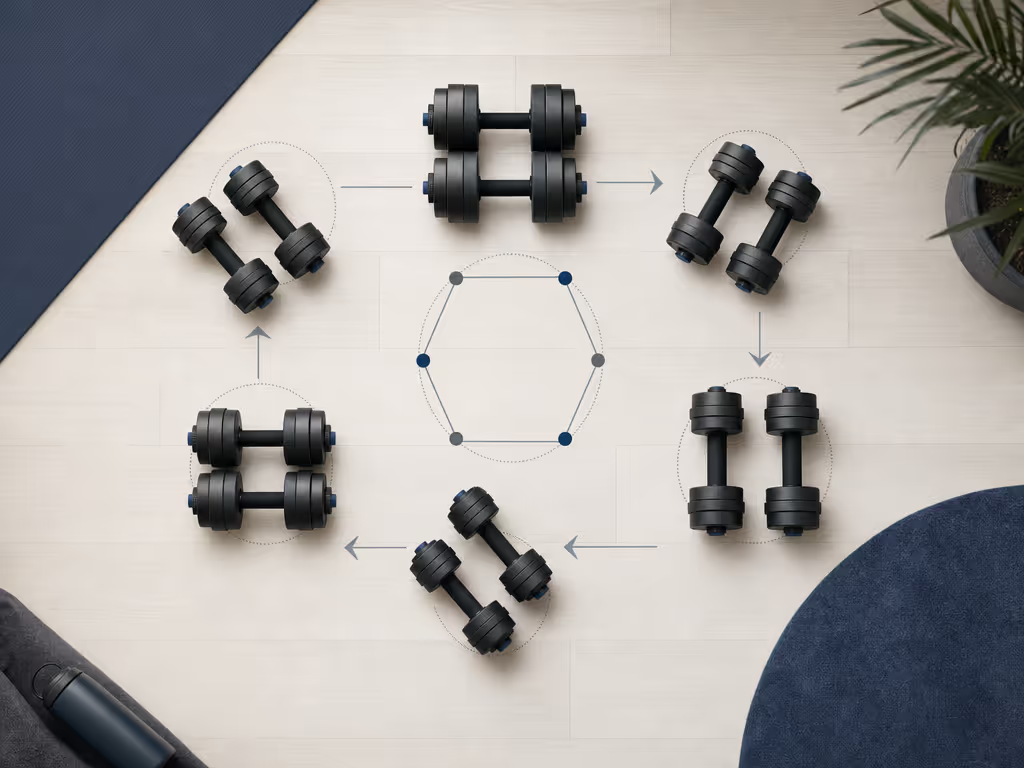
A useful framework has six foundational patterns: squat, hinge, lunge, push, pull, and carry. It is a map, not a claim that every exercise in a category is identical.
For pattern-based planning, these categories prevent the usual mistake: replacing every familiar machine one-for-one and ending up with a cluttered, poorly balanced plan. Your dumbbells can cover several patterns in a small training area without imposing a large footprint tax on the room.
The pattern map
| If your gym work included… | Map it as… | Dumbbell-accessible option supported as that pattern |
|---|---|---|
| A squat-pattern exercise | Squat | Goblet squat |
| Hip-dominant lower-body work | Hinge | Dumbbell Romanian deadlift |
| Rowing toward the body | Pull | Dumbbell bent-over row or single-arm row |
The table deliberately presents a goblet squat as a squat-pattern example rather than assigning it as a leg-press replacement. Both may belong in lower-body programming, but goblet squats are a clear squat-pattern example. A movement category is not a biomechanics certificate.
FAQ: What is the best dumbbell alternative to a seated cable row?
A dumbbell bent-over row is the clearest pattern-level alternative in this guide. The cable seated row is classified as a compound pulling exercise that targets the general back, and the dumbbell bent-over row is listed as a related exercise.
Still, "related" is not "identical." The available guidance supports treating the dumbbell version as a row-pattern option, not a duplicate stimulus.
How to make the change without guessing
- Start with a load that allows controlled repetitions and consistent technique.
- For the cable seated row specifically, begin light and add weight gradually to allow lower-back adaptation.
- Record the load, reps, and whether your technique stayed consistent.
- Add resistance only when those reps are repeatable. If your next dumbbell jump is too large, progress with reps, an additional set, or more training density instead.
This is where adjustable dumbbells can reduce friction, provided you follow the manual for the exact set you own and review these adjustable dumbbell safety guidelines. Adjustment, storage, locking, and handling rules are model-specific. Do not assume one design's rules apply to another.
FAQ: Can dumbbells replace a chest-press machine?
The available guidance supports only a push-pattern comparison. NASM lists dumbbell bench press and overhead press as push-pattern examples, but that classification does not establish either as a direct chest-press-machine replacement or support assigning a matching load.
Treat them as pattern examples rather than machine equivalents. Do not convert the machine stack number into a dumbbell target.
Separately, a cautious dumbbell setup matters in shared spaces. Place dumbbells down under control rather than dropping them, and keep the training area clear. The sound people notice is often not just the impact: it is the rattle budget from loose gear, hurried changes, and repeated hard contact with the floor. After logging late-night changeovers in a thin-walled building, I learned that the most neighbor-friendly solution is usually procedural: deliberate lift-offs, deliberate returns, and no rushed hardware.
FAQ: Can a dumbbell row replace a lat pulldown?
Not directly. A lat pulldown is a vertical pull, while a dumbbell row is a horizontal pull. Both fit the broad pull category, but that does not make them interchangeable.
If your gym program depended on lat pulldowns, be precise about the compromise: a dumbbell row lets you retain pulling work at home, but it does not recreate the pulldown. That distinction is not pedantry. It keeps your plan honest and helps you notice what your home setup does, and does not, cover.
FAQ: What does a complete dumbbell-based session look like?
NASM provides a full-body dumbbell routine that includes a Romanian deadlift, single-arm row, dumbbell overhead press, goblet squat, and farmer carry. That is a clean session structure because it includes hinge, pull, push, and squat examples, alongside a farmer carry. It is an example session, not an individualized prescription or evidence that every listed movement fits a particular home setup.
A general strength-focused starting framework is 2 to 4 sets of 8 to 12 repetitions for strength movements, with full-body sessions 2 to 3 times per week presented as general guidance (not a personal prescription). For healthy novices, ACSM also cites 2 to 3 days per week as a training-frequency recommendation.
For carries, use a route with clear flooring and enough control to set the bells down softly. There is no need for noisy conditioning tricks in an apartment. Your test is simple: can you complete the planned work with steady technique, a quiet return to storage, and no next-day concern that you trained at someone else's expense?
FAQ: Are 20-pound dumbbells enough to build muscle?
The available guidance does not determine whether 20-pound dumbbells are enough to build muscle for a particular person or exercise.
Rather than treating a fixed number as a verdict, track progress through several variables:
- more controlled repetitions,
- more sets,
- greater training density,
- increased resistance when technique is consistent,
- more demanding exercise variations as competency improves.
Progress can also show up in posture, range of motion, balance, and movement efficiency (not just the number stamped on the dumbbell).
FAQ: What is the dumbbell equivalent of a 225-pound bench press or 50-pound dumbbells?
The available guidance does not provide a barbell-to-dumbbell or dumbbell-to-machine conversion formula for either number. Use performance within the actual movement you are training: controlled reps, repeatable technique, and gradual progression.
Summary and Final Verdict
The right answer to machine-to-dumbbell exercise conversions is pattern first, load second. Build around squat, hinge, push, pull, and carry work; use pattern examples such as goblet squats, Romanian deadlifts, and rows where they fit your setup; then progress from controlled performance rather than a machine-stack calculation.
Your final verdict should be practical: home dumbbell training does not need to imitate every gym machine to be structured and progressive. It needs a low-friction plan you can repeat two or three times weekly, a sensible rattle budget, and a method for logging improvement through progressive overload with adjustable dumbbells. When space is limited and walls are thin, that is the standard that earns a place among your free weights gym equipment.
Related Articles