
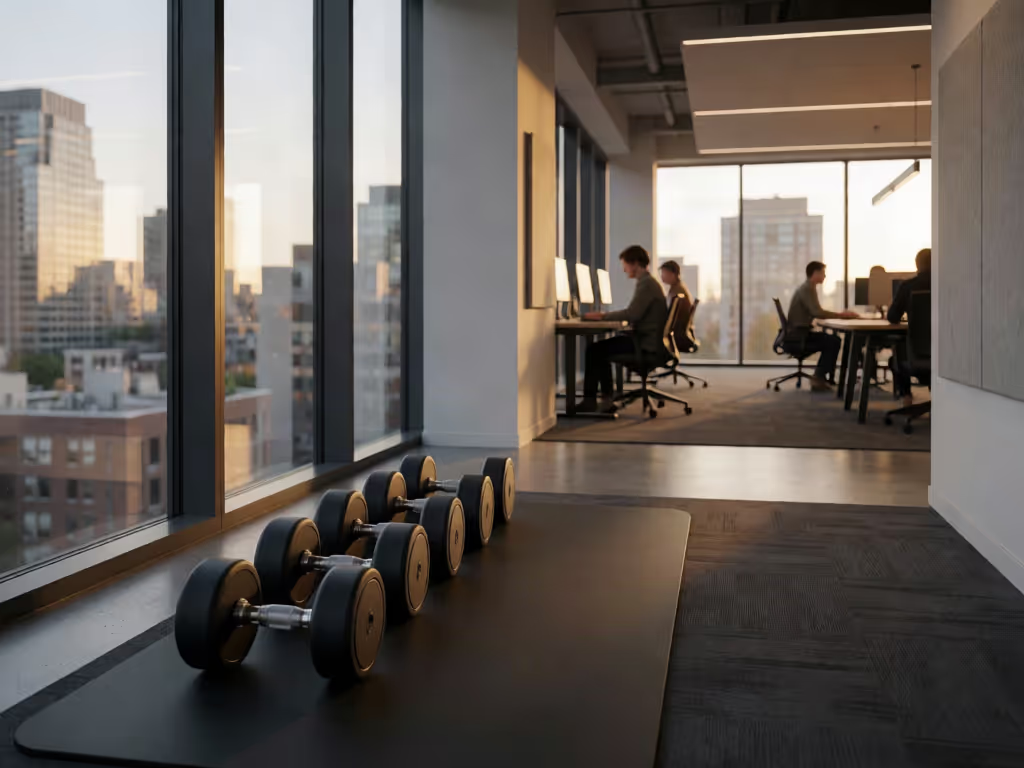
Quiet Floor Protection for Adjustable Dumbbells
By Amara Ncube • 16th Nov
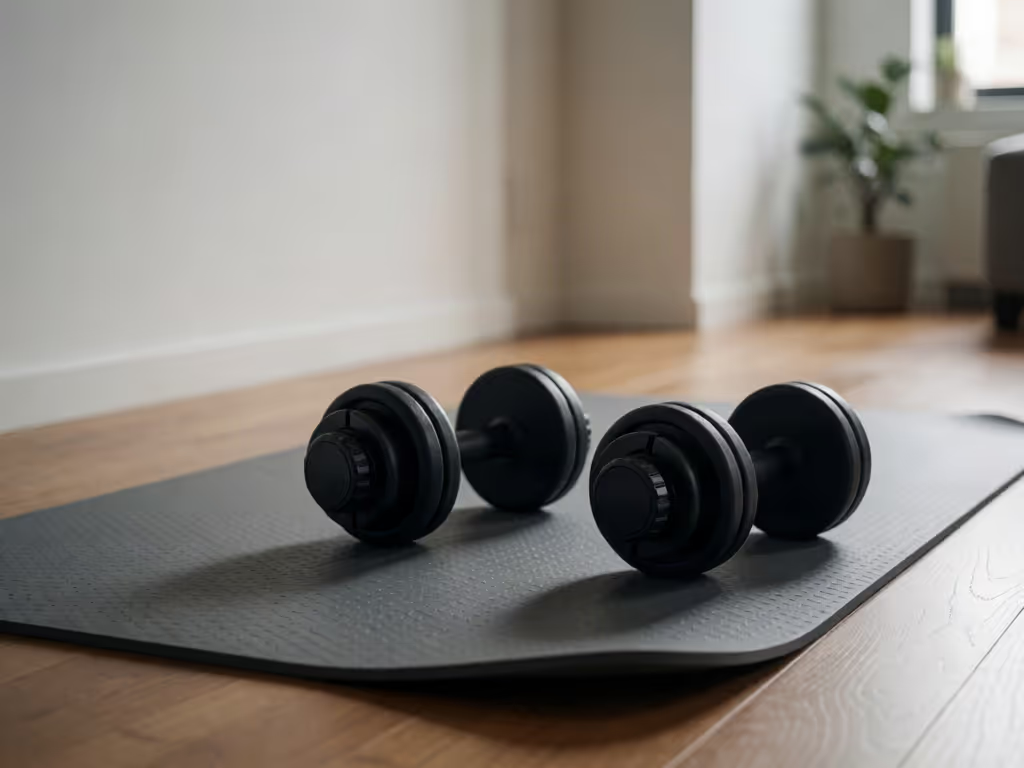
At a glance
The strongest overall approach is not a universal mat thickness: audit your training footprint, use a stable non-slip covering, and control every set-down. This protects the room more reliably than relying on cushioning alone.
- Best overall: Choose a flat, firm mat sized for the full working and storage area, with grip on top and resistance to movement underneath.
- Best for small or irregular rooms: Measure before buying; interlocking sections can adapt to awkward spaces and make storage easier.
- What decides it: Follow your dumbbell’s own handling instructions, keep the mat clean and fully dry, and treat thickness ranges as supplier context—not a universal noise or floor-protection guarantee.
Important: Independent testing does not establish how a particular mat performs over concrete, timber, tile, carpet, or laminate, so inspect the existing floor and verify relevant flooring guidance before making permanent changes.
Adjustable dumbbells make a small-space workout practical, but dumbbell floor protection deserves the same deliberate planning as the weights themselves. The sensible target is not the thickest possible mat. It is a stable, right-sized training surface paired with controlled handling and basic upkeep, especially if you share a building, a room, or a ceiling with people who value their evenings.
I learned that lesson while living above a café: a little clank can feel much bigger when it becomes somebody else's problem. Every dollar should buy quiet, durability, and real progress.
1. Start with a use audit, not a thickness number
The question is not simply, "Should you put a mat under exercise equipment?" For adjustable dumbbells, ask what the floor covering must do in your routine.
Write down:
- Where each dumbbell rests between sets
- The full space you occupy while lifting
- Whether you use a bench or other equipment that changes the usable area
- Whether the dumbbells return to a cradle or base
- How you actually end a hard set: a deliberate set-down or an uncontrolled release
- Whether the training area must pack away after use
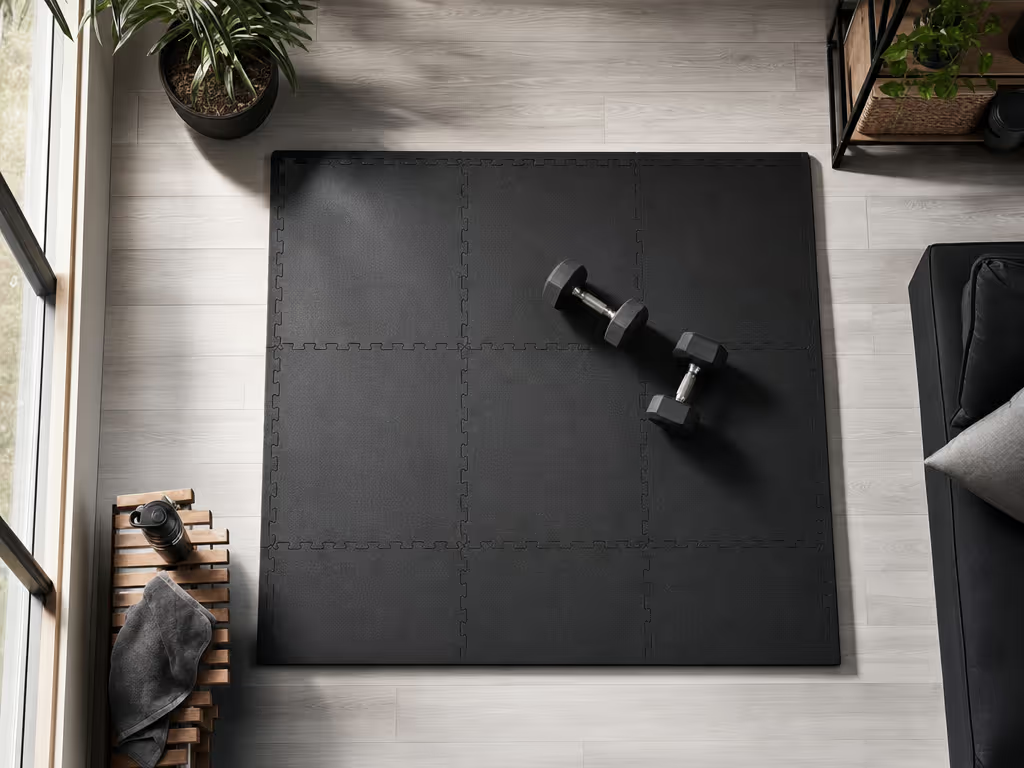
This audit prevents a common false economy: buying two small pads that only protect the storage spot while leaving the rest of the training zone unplanned. Measure the available space before choosing a mat. If the room is awkwardly shaped, quiet dumbbell accessories and interlocking flooring solutions can be a practical way to fit the area without turning the whole room into a permanent gym.
Protect the working zone you use, not just the place where the dumbbells sleep.
A mat is often a reasonable part of home gym flooring for weights, but it is not an automatic yes for every room, finish, or workout. The best decision starts with the room, the movement, and the equipment instructions, not a generic shopping rule.
2. Treat quiet handling as the first layer of protection
Flooring cannot substitute for using the equipment as its maker directs. Read your specific dumbbell manual and review this adjustable dumbbell safety guidance before setting up the area, particularly if the set uses a selector mechanism and a storage base.
For example, the manufacturer of the Bowflex SelectTech BD552 instructs users not to let those dumbbells fall freely to the ground and not to forcefully strike them together. That is model-specific guidance, not a rule that can be transferred wholesale to every adjustable design. Still, it illustrates the right starting point: a controlled return protects both the gear and the room.
For BD552 owners specifically, the manual also calls for returning the dumbbell vertically, perpendicular to its base, without tilting or moving sideways until it clears the unselected plates. If you own a different base-style set, follow its manual rather than copying this procedure.
Build these habits into each session:
- Finish the rep before lowering the bell.
- Set the dumbbell down with intent rather than releasing it at the bottom of the movement.
- Keep the dumbbells from hitting each other.
- Return base-style equipment according to its own instructions.
- Pause use if a locking mechanism or a component appears worn or damaged; follow the manufacturer's service guidance.
This is the thrifty part of the plan. A mat is worth having only when it supports a routine you can repeat calmly, not when it becomes permission to handle a mechanical tool carelessly.
3. Choose stability before extra cushioning
For dumbbell mats for hardwood floors or any finished surface, start with two checks: grip under your shoes and resistance to the mat moving underneath you. Fitness-mat guidance specifically recommends checking slip resistance on the top surface and resistance to movement on the underside.
That gives you a plain-spoken selection test:
- Does the top feel secure for your normal stance?
- Does the underside resist shifting during your normal movements?
- Does the mat lie flat in the space you measured?
- Does the surface feel firm enough for stable strength training?
Do not assume thicker is automatically better. A fitness-mat supplier notes that overly thick mats can create stability issues in strength training, where firm support matters. That is a meaningful tradeoff in a compact room: cushioning that makes footing feel uncertain is not a bargain.
Before adding any covering over laminate, identify existing concerns such as moisture, unevenness, or a floor that already shows distress. A laminate installation guide requires a clean, dry, flat subfloor during installation; that does not dictate what mat to buy, but it is a useful reminder not to ignore the underlying floor. If you are considering a change that affects the flooring assembly, consult the flooring manufacturer's guidance.
4. Use thickness ranges as shopping context, not a promise
"What is the best thickness for a gym floor mat?" has no universal answer in the available guidance. One flooring provider says thickness depends on the planned exercise. Another supplier places 8-10 mm rubber flooring in a general or moderate-weight category and 12-15 mm in free-weight and heavy-equipment areas. These are supplier-stated use-case ranges, not independent proof that a particular thickness will be adequate for your dumbbells, your building, or your floor construction.
That includes the popular "Is 3/8 inch thick enough?" question. Three-eighths of an inch is roughly within that supplier's 8-10 mm general/moderate-use range. It is not a universal quietness or protection guarantee.
A practical decision sequence is:
- If your training involves controlled set-downs, prioritize a flat, stable mat with reliable grip and a footprint that fits your routine.
- If your workout involves intentionally dropping weights, do not use a generic mat thickness chart as clearance to do so. Revisit your training setup and equipment instructions.
- If the floor or lease situation is uncertain, get direction from the relevant flooring maker, property manager, or qualified local professional before making a permanent flooring change.
There is no collected independent acoustic testing here that can tell you how a given mat will perform over concrete, timber, carpet, tile, or laminate, so consult this apartment-safe dumbbell noise comparison for broader system-level context. Be skeptical of anyone offering a precise noise-reduction promise without testing that matches the actual floor assembly.
5. Plan the footprint for a real space dividend
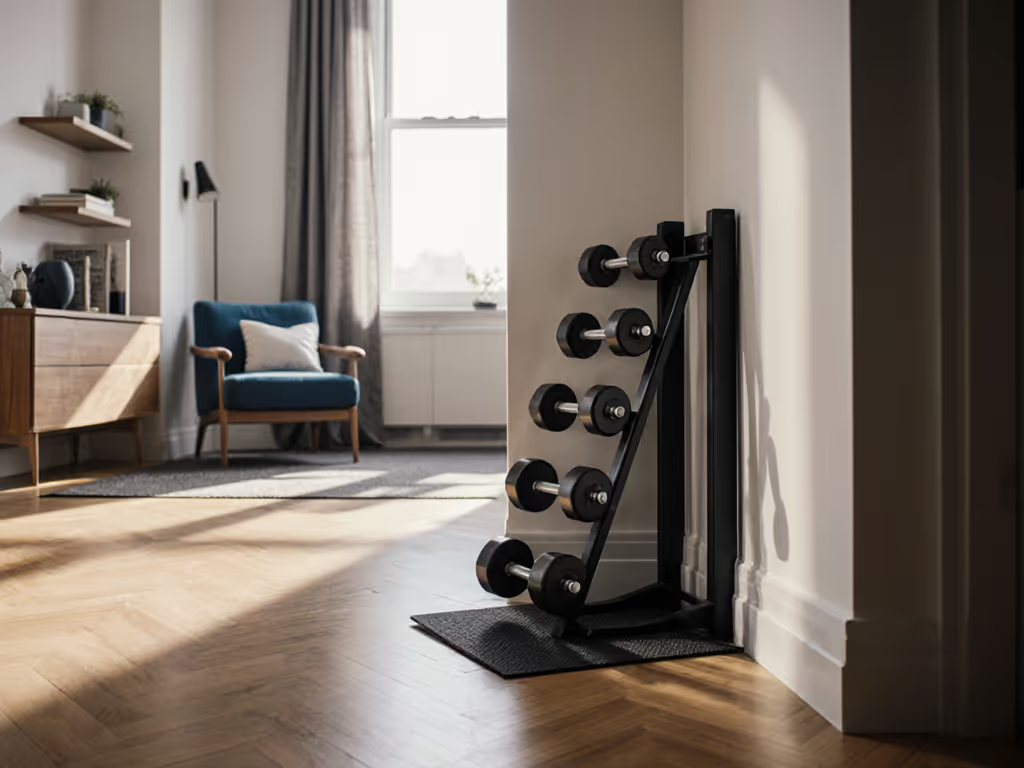
A well-planned mat can create a space dividend: it defines where training happens, where the dumbbells return, and where the rest of the room stays uncluttered, much like the storage strategies in these space-saving home gym solutions.
Keep the layout modest and useful:
- Map the exercise area before ordering anything.
- Allow for the dumbbells' storage position and the movements you perform.
- Choose a format that suits the room shape; interlocking sections may help with irregular spaces.
- Avoid buying a large stand or elaborate platform merely because it looks more serious.
- Store the dumbbells as their manufacturer directs when the session ends.
For a small apartment, "invisible in use" is often better than a showcase setup. The mat should make your routine easier to start and easier to put away, not claim permanent territory in a shared living room.
6. Maintain the mat so it stays usable
Sweat, dust, and grit are mundane, but neglected basics shorten the useful life of almost anything. Wipe away sweat and dirt after training, then let the mat air-dry in a cool, ventilated area. For broader equipment care, see this guide to maintaining adjustable dumbbells for years of quiet use. Guidance for rubber gym mats also advises allowing them to dry completely before working out on them again.
Keep maintenance simple:
- Remove loose dirt before it gets ground into the surface.
- Clean according to the mat manufacturer's instructions.
- Let the mat dry completely before use.
- Periodically lift or move portable coverings to inspect the area beneath them and the mat itself.
- If you see a change in the existing floor finish or have moisture concerns, consult the flooring manufacturer before changing the setup.
Avoid confident claims that a particular material is universally safe for every hardwood, laminate, tile, carpet, or finish. The available guidance does not establish that rubber, PVC, EVA, or other materials will behave the same way against every flooring system.
7. Separate what you know from what you need to verify
Good floor protection is mostly disciplined decision-making. You can verify your training footprint, check both sides of a mat for grip, follow the dumbbell manual, and keep the surface clean and dry. You cannot responsibly assume a generic mat rating predicts vibration reduction under dumbbells in every building.
This guide contains no affiliate product recommendations. If you buy used flooring or equipment, inspect condition carefully and make sure the original operating instructions are available. Cheap, damaged gear is not a win if it creates more friction, more clutter, or more uncertainty.
FAQ
Can mold grow under rubber flooring?
The available guidance supports cleaning mats and allowing them to dry completely before use, but it does not establish whether mold will grow under rubber flooring or identify the conditions that would cause it. Treat moisture as a reason to inspect the setup and follow the flooring and mat makers' care instructions.
Is 3/8-inch flooring enough for adjustable dumbbells?
It may fall near a supplier's general/moderate-use range, but that does not establish adequacy for a particular adjustable dumbbell, set-down behavior, existing floor, or building. Choose based on stable footing, mat grip, full workout footprint, equipment instructions, and any applicable flooring guidance.
Further exploration: make one small test before committing
Before building out a larger home gym, mark the intended training area with tape and complete a few normal sessions using controlled set-downs. Notice whether the space supports your stance, storage, and cleanup without crowding the room. Then choose the smallest durable flooring solution that meets that real routine.
That is the calm, durable approach: fewer assumptions, less gear, and a setup that disappears into daily life while your training keeps moving forward.
Related Articles
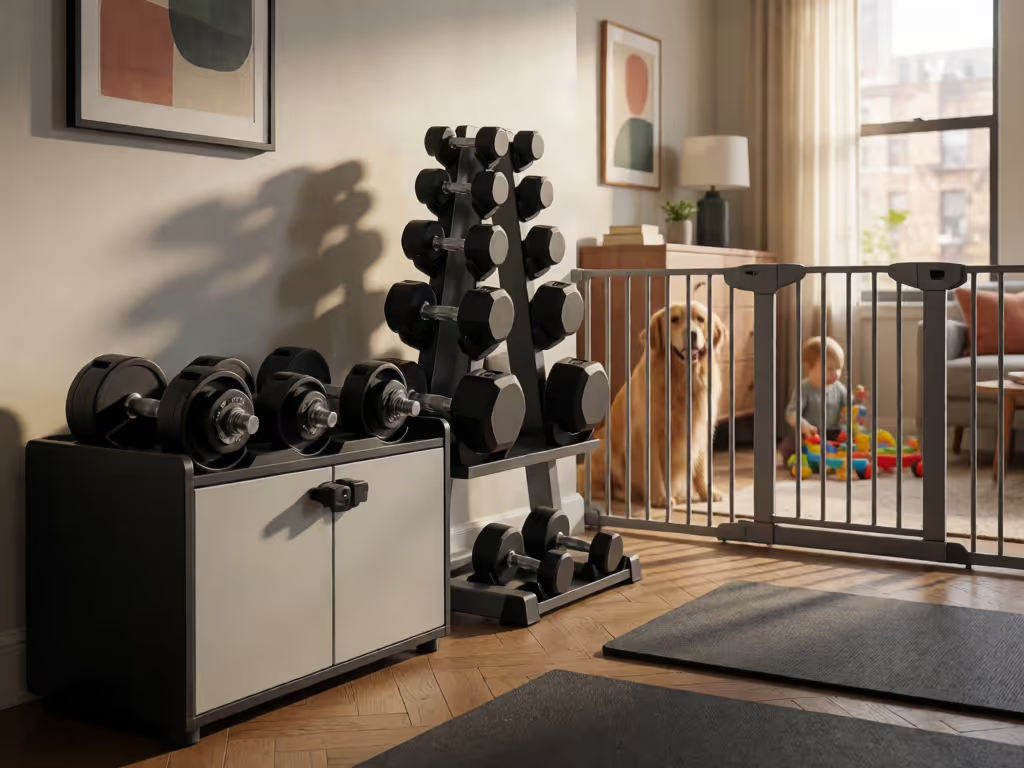
Ownership: Care, Safety & Space Management
Adjustable Dumbbell Safety: Secure Home Gym Workouts
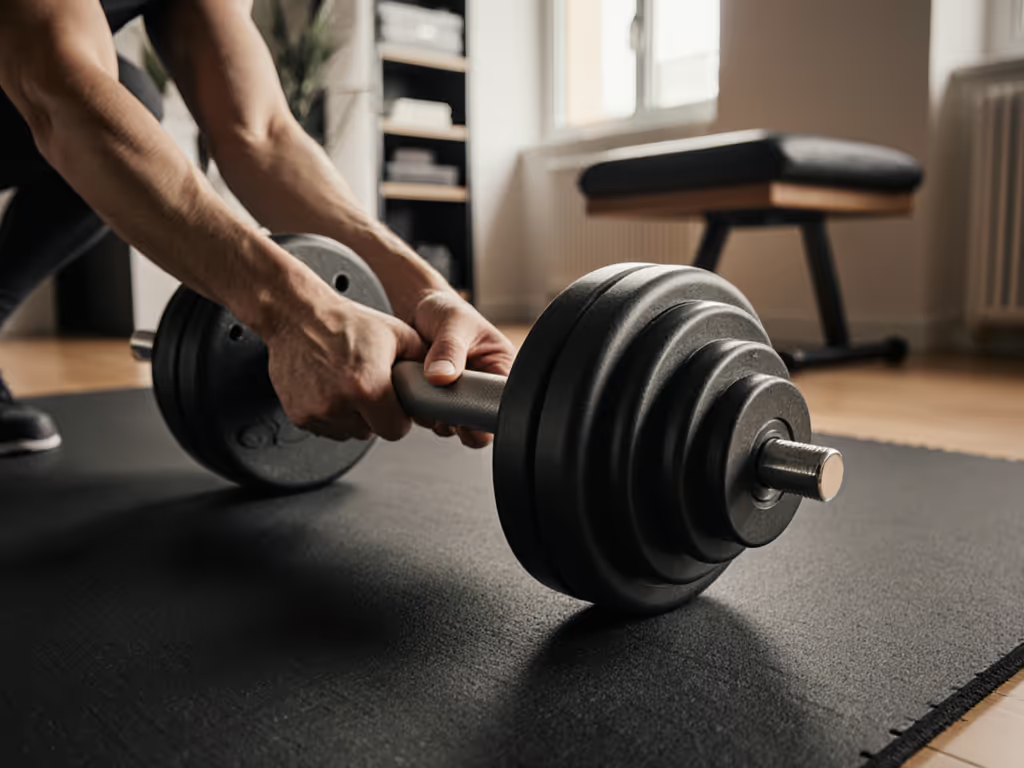
Practical, evidence-informed guidance to reduce noise, protect joints, and prevent mishaps when training with adjustable dumbbells at home. Follow clear checks and techniques for handle selection, smart loading, and silent set-downs to keep workouts safe and sustainable.
Ownership: Care, Safety & Space Management
Compact Dumbbells: Space-Saving Home Gym Solutions
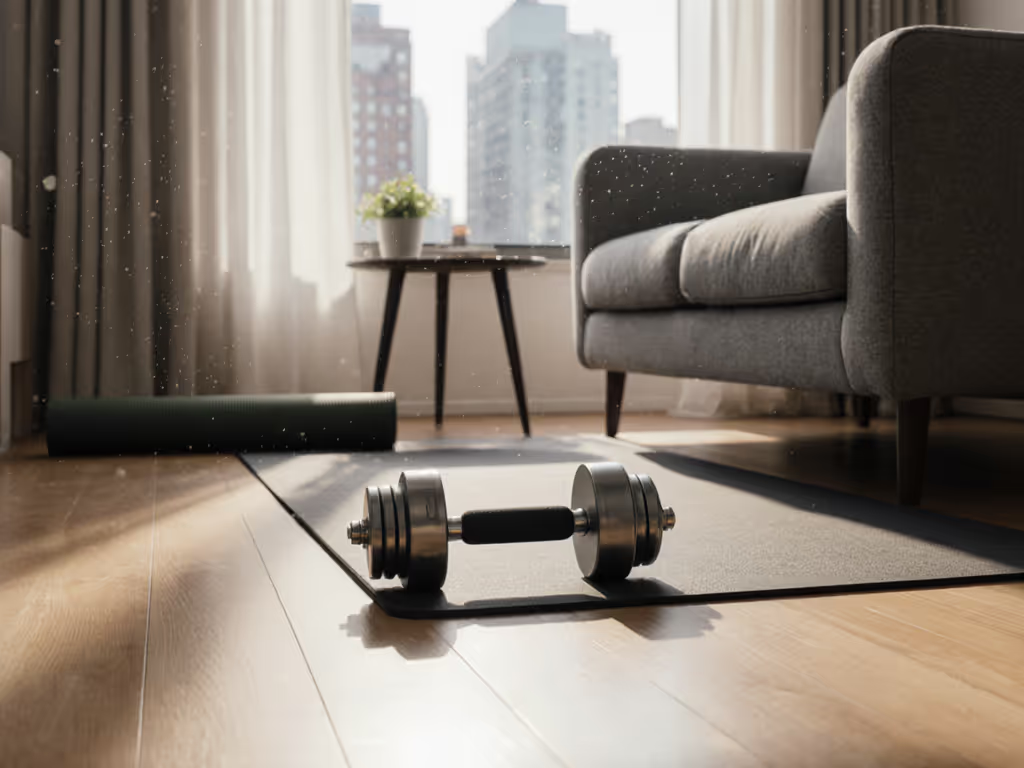
Build a frictionless, apartment-friendly dumbbell setup with one-hand weight changes, micro-loading, low-vibration cradles, and consistent handle geometry, then follow a 5-minute plan to fit it into your space and schedule.