Quiet Adjustable Dumbbells for Office and Coworking Gyms
By Mateo Alvarez • 6th Sep
At a glance
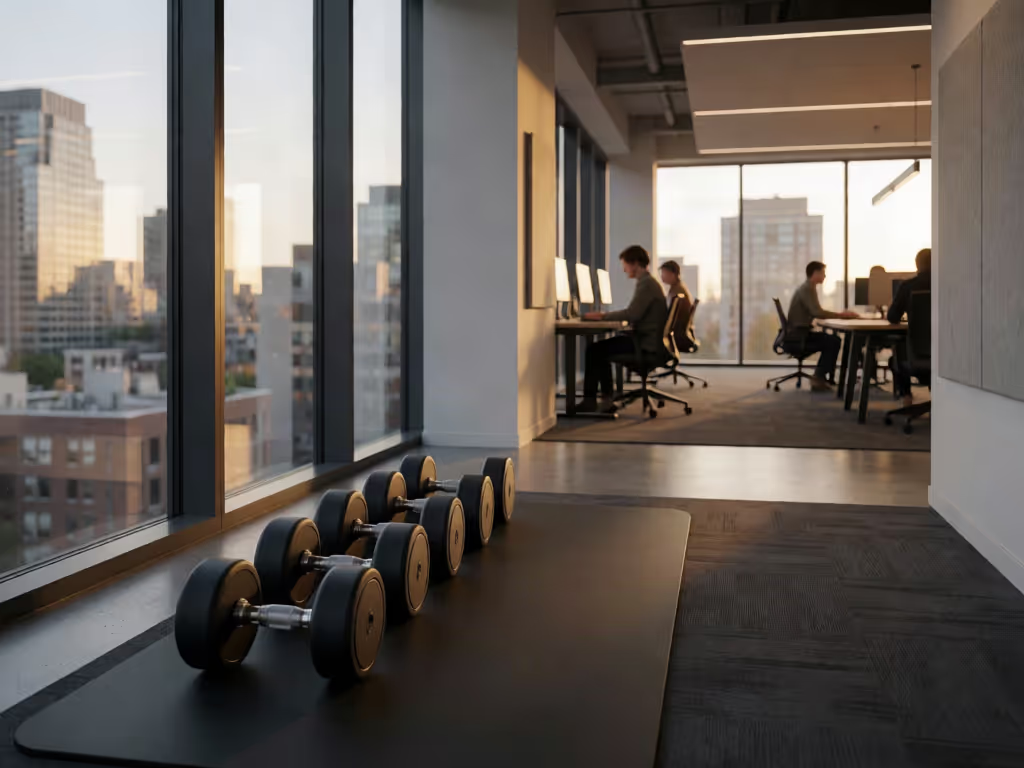
Adjustable dumbbells are a practical choice for a small office or coworking gym when space is limited and someone owns cleaning, inspection, and reset procedures. No broadly applicable acoustic testing establishes a universal quiet model or ranking.
- 1. Best overall: Use adjustable dumbbells for controlled, lower-turnover use where compact storage matters more than instant exercise changes.
- 2. Best alternative: Choose fixed dumbbells for busy, high-turnover rooms where rapid transitions and simpler shared use outweigh rack space.
- 3. What decides it: Plan the cradle, instructions, cleaning supplies, defect reporting, and maintenance together. Moving parts and model-specific care make exact manufacturer guidance essential.
Important: No collected evidence establishes a universal quiet model, ideal weight range, commercial durability standard, or code-compliant room layout. Site-specific facilities, safety, legal, and insurance review may be needed.
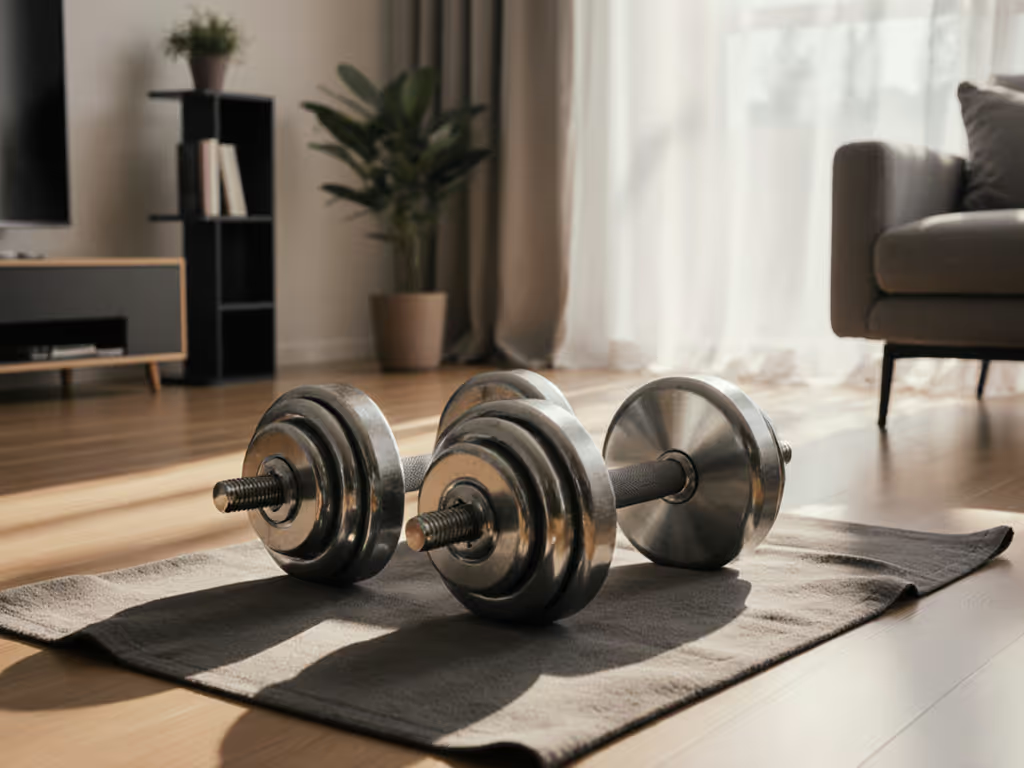
Adjustable dumbbells can make a small office or coworking gym more useful without committing the room to a full dumbbell rack. But "quiet" should mean more than a product label. No broadly applicable acoustic testing establishes which adjustable set, cradle, or mat is quietest in a workplace, so our adjustable dumbbell noise comparison should be treated as useful context rather than a universal office standard. The practical goal is a low-disruption system: deliberate handling, clear storage, quick cleaning, and equipment that does not invite constant tinkering.
For corporate wellness strength equipment, the best choice is rarely the most elaborate one. It is the setup people can understand, use, reset, and share during a short break.
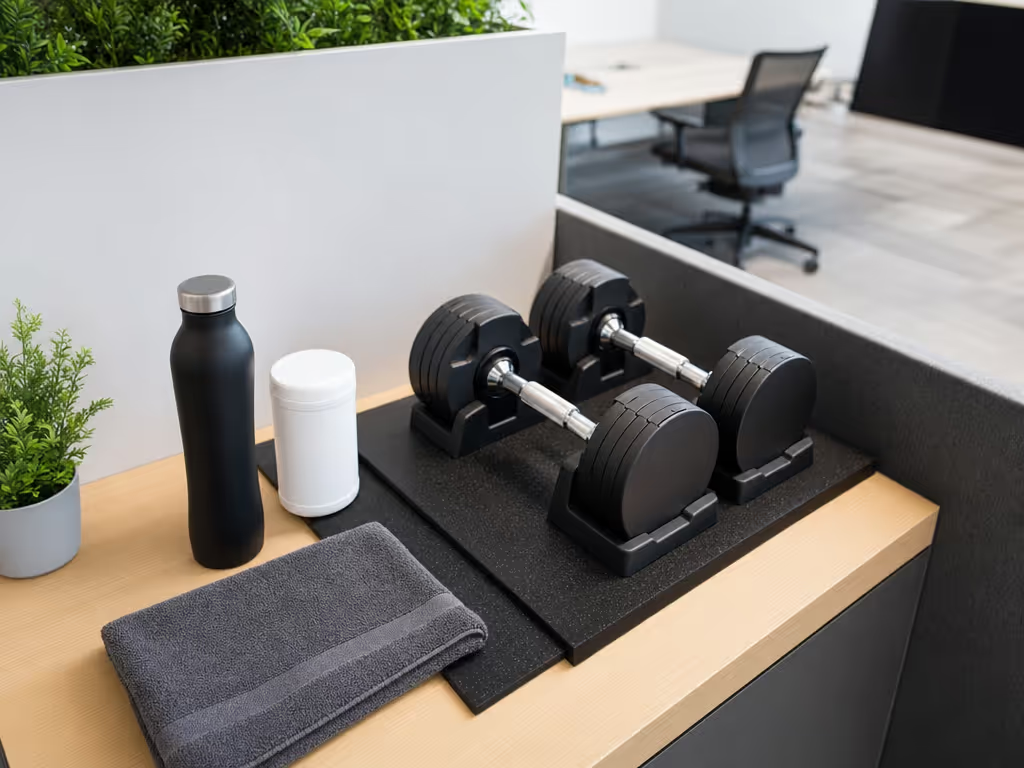
1. Define "quiet" as an operating standard, not a promise
A coworking gym has different stakes than a private home gym. Users may be working nearby, taking calls, or moving through the space throughout the day. That makes predictable behavior more important than impressive-looking gear.
Build the room around these non-negotiables:
- No dropping weights. Every dumbbell returns to its cradle under control.
- No improvised repairs. A sticky selector, loose component, or damaged cradle is reported, not "worked around".
- No loose plates or accessories left out. The next user should start with a clear station.
These are the foundation of useful shared gym etiquette guidelines. They reduce both actual disruption and the uncertainty that makes people avoid the room.
Small frictions decide whether today's workout happens or doesn't.
2. Use adjustable dumbbells when space is the binding constraint
An adjustable pair is worth considering when a rack would crowd out the room's walking space, desk-adjacent area, or other equipment. Adjustable dumbbells are commonly treated as a space-saving alternative to owning a full set of fixed weights.
That advantage matters in coworking fitness room design. A compact station can leave the room flexible for mobility work, a bench, or simply a less cramped feel.
There is an important trade-off: fixed dumbbells are generally favored in high-use shared facilities because users can move between exercises without changing settings, and they better suit frequent use by many people. That does not rule out adjustables. It clarifies the decision:
- Choose adjustable dumbbells when the room needs broad weight options from a compact footprint and use is relatively controlled.
- Consider fixed dumbbells when many people will use the room in quick succession and rapid, no-instruction transitions matter more than space savings.
Do not treat either choice as universal. The evidence does not establish an ideal weight range, capacity ratio, or one best equipment type for every office.
3. Evaluate setup friction before headline specifications
In a shared room, the selection question is not only "How much weight does it offer?" It is also: "Can a new user reset it correctly without stopping to decode it?"
Use this short procurement checklist:
- Weight readout: Can users see the selected weight clearly while standing over the unit?
- Changeover sequence: Does the adjustment method have few obvious steps, with a repeatable return-to-cradle routine? A deeper adjustable dumbbell mechanism comparison can help facilities teams evaluate selector pins, twist locks, dials, and digital systems.
- Cradle behavior: Does the dumbbell have a defined home that keeps the station orderly?
- Locking inspection: Is there an easy, documented way for the facilities owner to inspect locking parts and cradles?
- Manual fit: Does the manufacturer permit the intended setting and use environment? Check the exact product documentation rather than assuming home-use guidance covers a shared workplace.
- Maintenance burden: Are staff prepared to keep debris away from adjustment components and follow the maker's cleaning instructions?
One publisher-reported adjustable-dumbbell evaluation scores models for durability, weight options, adjustment speed, handle design, and value. That is a sensible framework, but it is mostly home-gym oriented. For an office, add one more category: reset reliability across different users.
A fast change is valuable only when it remains understandable. In my own nap-window training, simple tray angles, clear labels, and mechanisms that returned cleanly to place reclaimed surprising amounts of time between supersets. In a coworking room, that same design discipline helps users finish a brief session and leave the station ready for the next person.
4. Plan the station and the workflow together
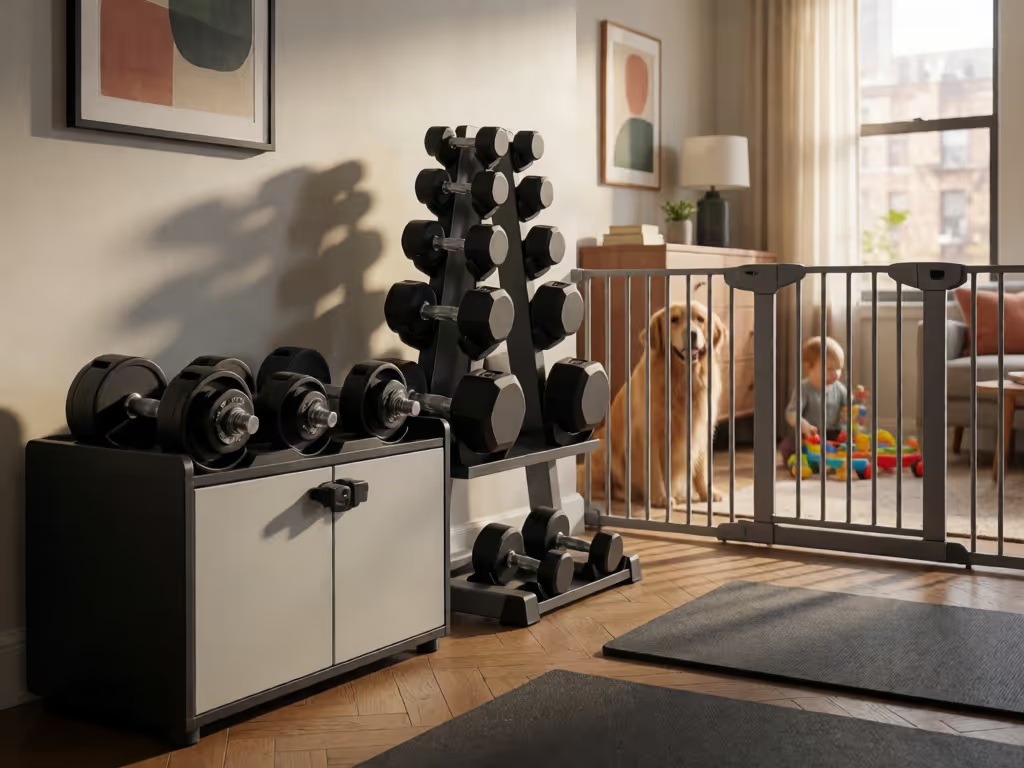
Do not buy the dumbbells first and invent storage later. Shared facilities need the equipment and its storage plan to work as one system, otherwise the free-weight area becomes cluttered as needs change; a guide to quiet dumbbell cradles and storage accessories can help refine that station.
Keep the station intentionally minimal:
- Dumbbells in their assigned cradle or stand
- One visible instruction card for adjustment and return
- A defect-reporting method that is easy to find
- Cleaning supplies placed at the point of use
- No overflow gear stored around the base
Avoid guessing at room clearances, building loads, egress routes, or accessibility requirements. Those are site-specific facilities and safety questions, not details a generic equipment guide can settle. Have qualified building, facilities, safety, and (where relevant) legal or insurance professionals review the proposed room before it opens.
The objective is not to create a miniature commercial gym. It is to create a station with low setup friction: walk in, train, reset, leave.
5. Make cleaning the easiest action after the workout
Shared equipment succeeds when the clean-up step is visible and close by. In one university fitness-room study, full post-use bench cleaning averaged 8% at baseline. When signs were paired with increased access to cleaning materials, it averaged 53%. That study examined benches, not dumbbells, and it did not measure health outcomes. Still, it offers a useful room-design lesson: prompts and supplies work better together than either vague expectation alone.
Put the cleaning cue where the user finishes, not across the room or inside a cabinet. Then specify the sequence in plain language:
- Wipe the contact surfaces after use.
- Use only products compatible with the exact dumbbell manufacturer's instructions.
- Dry surfaces as directed.
- Return the dumbbells to their cradle or stand.
- Report a fault before the next person uses the station.
For example, one adjustable-dumbbell manufacturer advises wiping its own models after workouts, drying metal surfaces, clearing debris around plates and adjustment mechanisms, and inspecting locking components and cradles as part of more thorough care. For broader guidance on cleaning and maintaining adjustable dumbbells, use a model-specific care routine that covers storage, troubleshooting, and long-term upkeep. Treat that as model-specific guidance, not a universal maintenance recipe.
6. Assign ownership instead of relying on good intentions
The fastest way for a shared gym to become noisy, messy, or unreliable is for everyone to assume someone else handles it. Give one person, vendor, or facilities team clear responsibility for maintenance.
A workable operating checklist includes:
- Posted room hours and rules
- An emergency contact and a defect-reporting route
- A written user agreement or acknowledgement, reviewed for the organization's jurisdiction and insurance needs
- A named maintenance owner
- An inspection record and maintenance log
- A process for removing equipment from use when something is wrong
Safety guidance for workplace fitness rooms recommends posted rules, defect reporting, maintenance responsibility, and retained inspection records. The exact agreement language and emergency procedures should be reviewed locally rather than copied from a generic template.
This is also where shared-room expectations become enforceable without making the room feel policed: "Return weights to the cradle; do not drop; clean contact surfaces; report faults." Four direct actions beat a dense wall poster.
7. Match the equipment decision to expected turnover
Adjustable systems contain moving parts, and some designs may include plastic components. One independent reviewer notes that adjustable dumbbells can be less durable than traditional cast-iron options for those reasons, though durability varies by model and construction. For a closer look at equipment choices in multi-user dumbbell environments, compare adjustment speed, weight-range coverage, and durability against the expected turnover.
Ask these questions before committing:
- Will the room see occasional, self-directed use or steady turnover all day?
- Is someone available to inspect and maintain adjustment mechanisms?
- Is the value of saved space greater than the value of instant exercise-to-exercise transitions?
- Can the organization follow the manufacturer's storage and cleaning directions consistently?
If the answers point toward light-to-moderate, orderly use, adjustable dumbbells can be a compact strength-training option within a broader wellness room. If they point toward high turnover and minimal oversight, fixed dumbbells may be the more forgiving operational choice.
FAQ
Are adjustable dumbbells actually worth it?
They can be, when they replace the footprint of many fixed pairs and the facility can support basic reset and maintenance. Their value is conditional: space savings are real, while moving parts add care and durability considerations.
What are the main downsides of adjustable dumbbells in a shared gym?
The key concerns are mechanism maintenance, debris or residue interfering with adjustment components, and the possibility that frequent multi-user handling is less forgiving than with fixed dumbbells. Exact risks vary by model, so follow the specific manufacturer manual.
Are adjustable weights or fixed dumbbells better for a coworking gym?
Choose adjustables for compact storage and a controlled user flow. Choose fixed dumbbells when frequent multi-user transitions and operational simplicity outweigh the space required for a rack.
Summary and final verdict
Adjustable dumbbells are not automatically quiet weights for workplace settings, because there is no universal acoustic evidence that proves that claim. They can, however, fit a shared-room system built around careful handling, simple reset, nearby cleaning, visible reporting, and scheduled maintenance.
Final verdict: for a small office or coworking gym with limited space and responsible operating ownership, adjustable dumbbells are a practical option. For a heavily used, low-supervision room, prioritize the simpler shared-use workflow of fixed dumbbells. Consistency over heroics: design the room so the considerate choice is also the easiest choice.
Related Articles
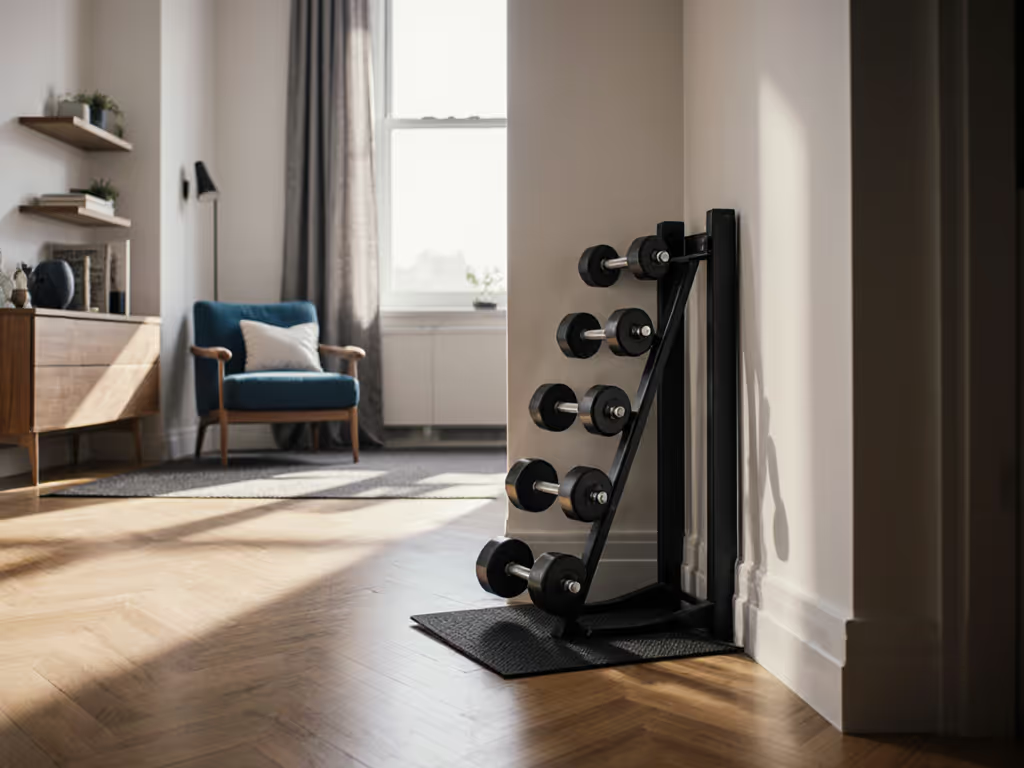
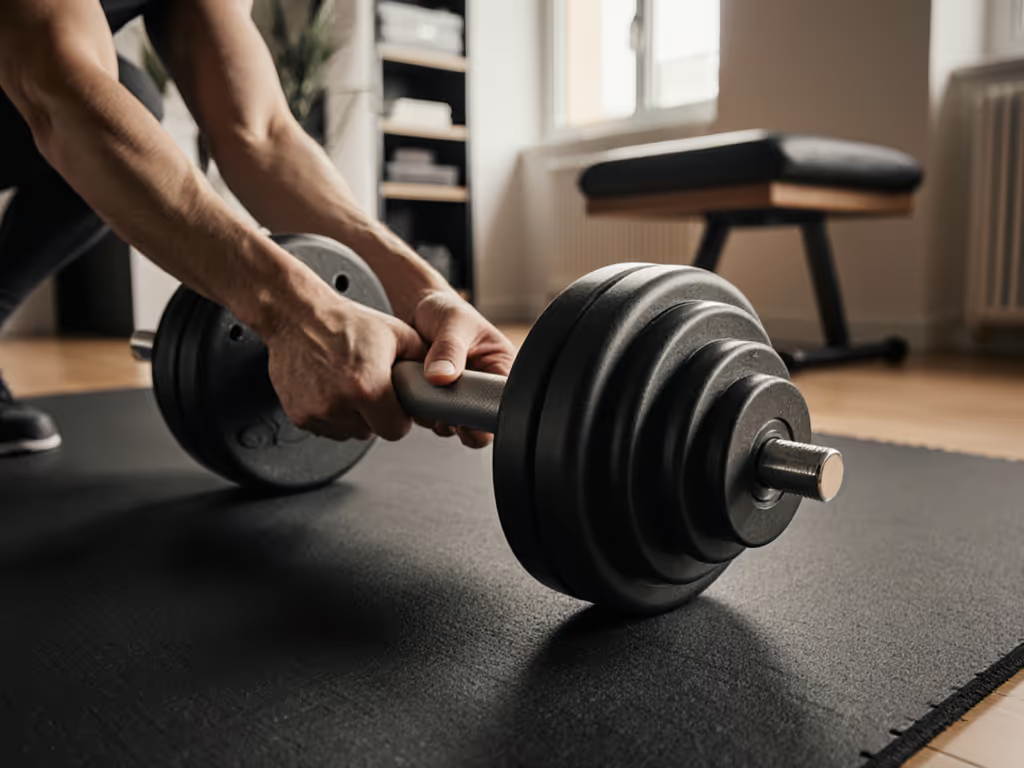
Ownership: Care, Safety & Space Management
Adjustable Dumbbell Safety: Secure Home Gym Workouts
Practical, evidence-informed guidance to reduce noise, protect joints, and prevent mishaps when training with adjustable dumbbells at home. Follow clear checks and techniques for handle selection, smart loading, and silent set-downs to keep workouts safe and sustainable.
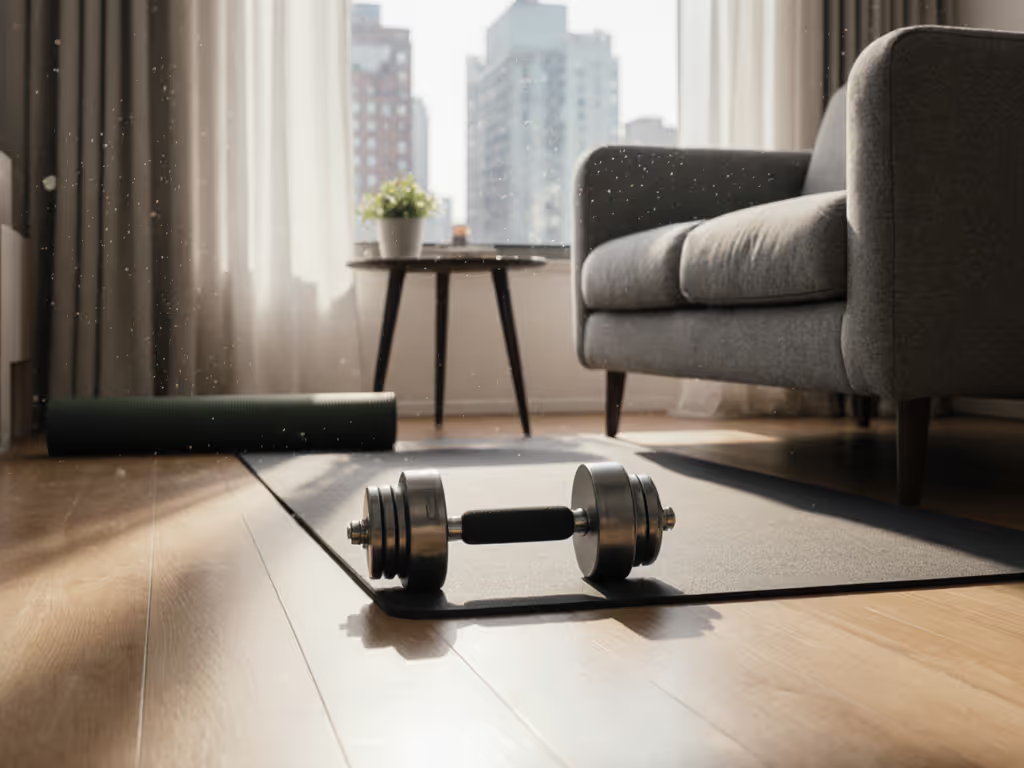
Ownership: Care, Safety & Space Management
Compact Dumbbells: Space-Saving Home Gym Solutions
Build a frictionless, apartment-friendly dumbbell setup with one-hand weight changes, micro-loading, low-vibration cradles, and consistent handle geometry, then follow a 5-minute plan to fit it into your space and schedule.