Childproof Dumbbell Storage for a Pet Safe Home Gym
By Viktor Ionescu • 2nd Sep
What to do first
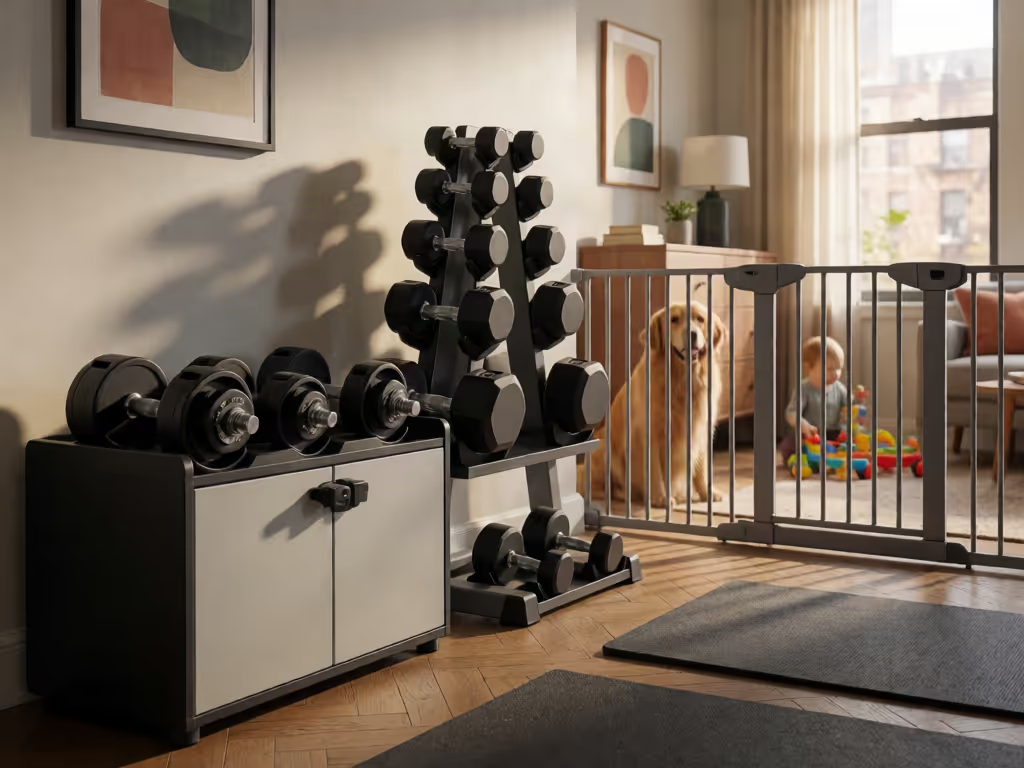
A practical child-safety dumbbell-storage plan is simple: restrict access to the workout area, put weights away after every session, and use stable, level support that matches the equipment and furniture instructions. This combines child-access and housekeeping measures without claiming any setup is completely pet-proof.
- What to do first: Use a closed door or gate, then make an end-of-session reset routine that includes putting the weights away. For adjustable dumbbells, IFAST Fitness recommends original trays or compatible cradles on a stable floor or purpose-built stand; follow the exact product instructions for compatibility and placement.
- Likely explanation: Adjustable dumbbell bases and locking systems vary.
- Stop or escalate when: Use only the locking or disassembly procedure provided for your exact dumbbell model.
Important: There is no universal best storage method, walkway width, or pet-proof cabinet established by the available evidence.
Childproof dumbbell storage is not a matter of finding a clever rack and calling the problem solved. In a compact home, the real job is to control access, put weights away after training, and use stable, level support, with adjustable-dumbbell compatibility and placement checked against the exact product instructions. That is the foundation of a less cluttered room where training equipment is put away after use.
If your dumbbells feel secure only while they are in your hands, your storage plan has a weak link. And in an apartment or condo, that weak link costs more than floor space: it interrupts training, creates unnecessary noise, and makes every session feel like a negotiation with the household.
The Problem: Dumbbells Become Hazardous When Storage Is an Afterthought
Dumbbells are simple training tools. Storage is where people get casual: a pair stays beside the sofa after presses, or plates remain in an adjustable-dumbbell base after the handle is removed.
That setup fails on three fronts.
Access is the first control point
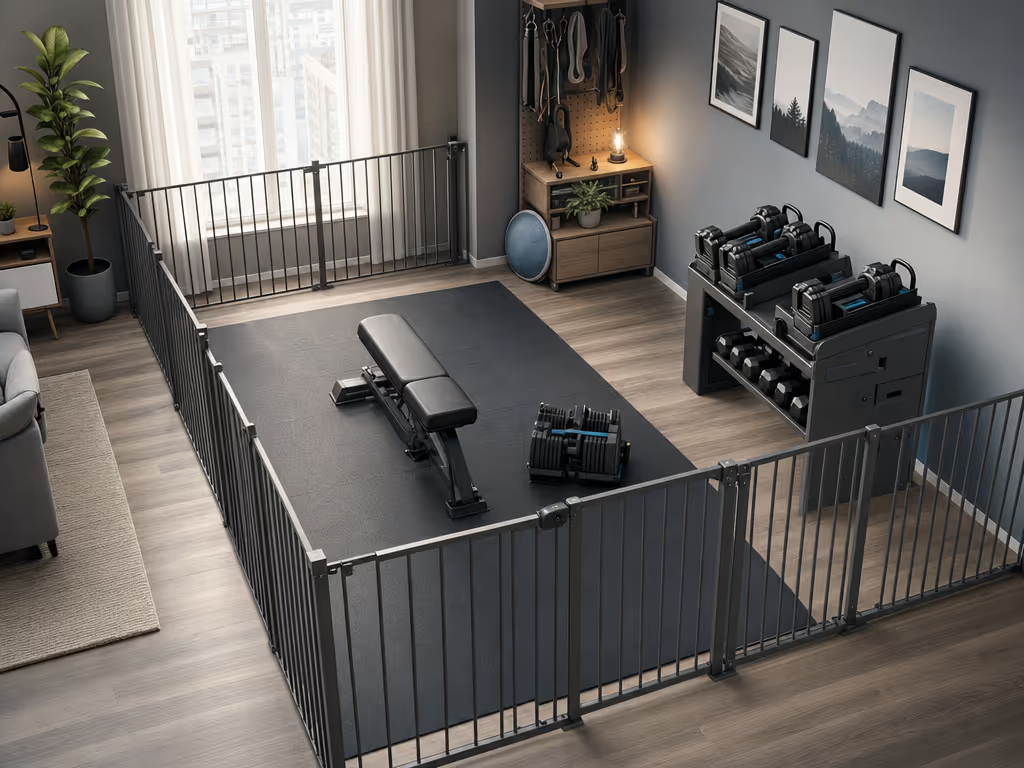
Children's Hospital of Philadelphia recommends separating the workout area with a closed room, a gate at an open doorway, or a baby gate around equipment. It also advises putting weights and resistance bands away after every workout.
That guidance makes physical separation part of the storage plan rather than relying on verbal rules alone, and our adjustable dumbbell safety guide explains additional ways to reduce risks during home workouts. “Don't touch the dumbbells” is not a storage system.
The adjustable-dumbbell base deserves specific attention
With adjustable sets, storage may involve more than the handle. The cradle, plates, and locking system can matter too, depending on the design. One manufacturer's manual, for example, warns that plates left in its base are not locked to that base; if the base is tilted or jostled, plates can fall out or tip over. The same manual says not to leave its base where it could be kicked, tipped, or disturbed.
The broader lesson is no-nonsense: follow the exact model's instructions for its locking and base procedures. Storage procedures vary by design, so do not borrow locking or disassembly instructions from another adjustable system. The mechanisms differ, and a method that works on one design may be wrong for yours.
Feel under load tells the truth when charts look similar. Storage tells the truth when the room gets busy.
Why the Usual “Just Put It in a Corner” Plan Breaks Down
A corner can be a good location, but it is not automatically a complete storage plan. These space-saving home gym storage solutions can help you compare options; check each option against the support surface, stated load rating, and equipment instructions.
CHOP also recommends positioning exercise equipment toward the room entrance so you can see someone approaching. That guidance applies while you are using the equipment.
A stand is not automatically safer than the floor
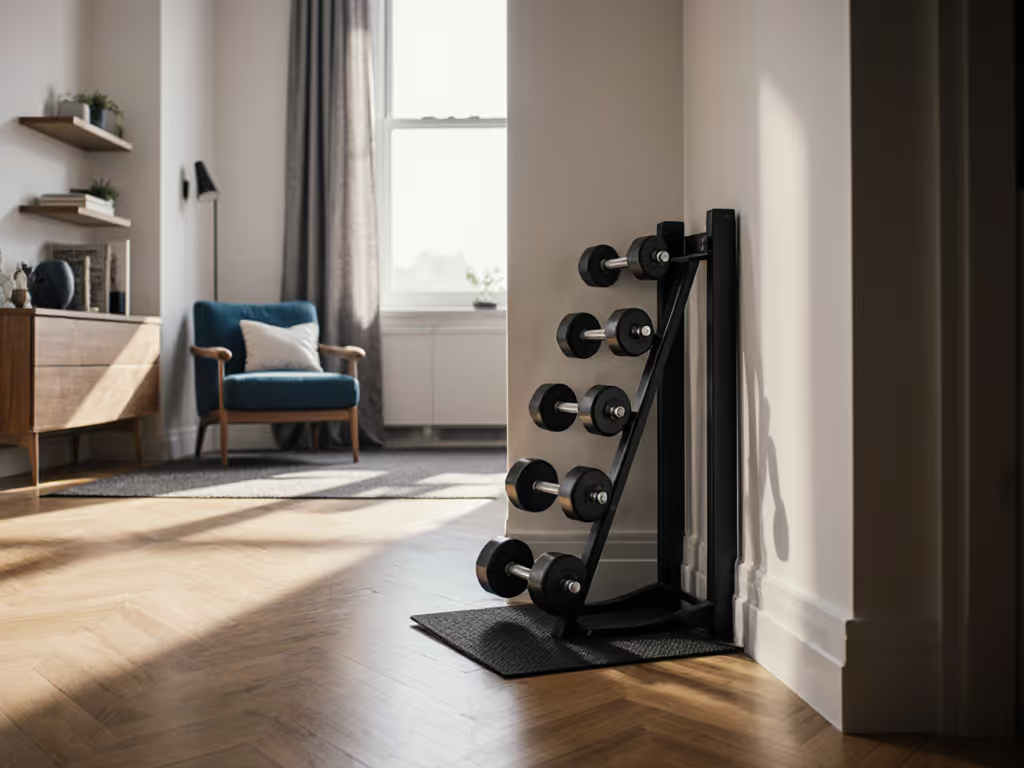
For adjustable dumbbells, IFAST Fitness recommends original trays or compatible cradles on a stable floor or purpose-built stand; defer to your exact dumbbell manual for compatibility and placement. Purpose-built dumbbell storage accessories can help you compare storage options. For dumbbell stand tipping prevention, start with the basics:
- Use a stand your dumbbell instructions permit, and confirm that its maker states it can support the full combined load.
- Set it on a stable, level surface.
- For furniture, shelves, carts, or cabinets, consult the maker's stated load rating and instructions. The available evidence does not validate any particular hidden or DIY storage solution.
It is tempting to treat wall anchoring as the universal answer. It is not. The U.S. Consumer Product Safety Commission advises anchoring qualifying top-heavy furniture with anti-tip brackets, following the furniture manufacturer's installation instructions. That is sensible guidance for applicable furniture; it does not mean every dumbbell rack or stand should be wall-anchored, or even can be safely anchored.
Lockable does not mean merely hidden
Searches for lockable weight storage often lead to cabinets, covers, or DIY enclosures. A closed workout-room door is an access-control measure, but that does not establish that a cabinet can safely carry the dumbbells, resist tipping, or suit your particular equipment.
A better hierarchy is:
- Restrict room access first with a closed door or gate.
- Put dumbbells away immediately after the session.
- Before using enclosed furniture, check its manufacturer's stated load rating and instructions. The available evidence does not validate a particular cabinet or enclosure.
- Anchor qualifying top-heavy furniture only when its manufacturer permits it and provides installation guidance.
This approach is less flashy than a hidden-storage hack, but it is stronger. Your training setup should not depend on a cabinet doing a job it was never rated or designed to do.
The Solution: Build a Storage Routine That Works at the End of a Hard Set
The best home gym child safety practice is the one you will complete when you are tired, late for work, and coming off a hard RPE 9 set. Make storage a fixed part of the workout rather than a cleanup task you may do later. That small shift pays off.
Use a three-part end-of-session reset
1. Put the weights away
For adjustable dumbbells, follow the exact manual for selector position, lock verification, handle removal, and cradle placement, along with this care and storage guidance for protecting the equipment over time. If the maker supplies trays or a cradle, check the manual for their proper use. IFAST Fitness, a fitness-equipment seller, recommends original trays or compatible cradles on a stable floor or purpose-built stand; treat that as general guidance, not a substitute for your model's manual.
For fixed dumbbells, follow the same general advice to put the weights away after the workout.
2. Finish the put-away check
CHOP's general guidance is to put weights and resistance bands away after every workout. For an adjustable system with detachable parts, follow its exact manual rather than transferring procedures from another design.
This is where consistency helps both safety and training feel. I learned after moving from a garage to a high-rise that one clack at the wrong moment can wreck focus for everyone nearby. For me, a deliberate return-to-cradle routine makes the next session start clean.
3. Restore the boundary
Close the gym-room door, latch the gate, or reset the barrier you use to separate the equipment from the rest of the home. Do it after every workout, including a quick ten-minute session. Short workouts create the most “I'll deal with it later” clutter.
Choose Placement for Stability, Not Convenience Alone
Start with stable, level support, then check the exact product instructions, the support's stated load rating, and the room-access plan.
Use this placement check before committing to a spot:
- Level: Is the floor or support surface stable and level?
- Visible while training: Is the exercise equipment positioned toward the room entrance so you can see anyone approaching?
- Compatible: Does the dumbbell manufacturer allow this cradle, stand, or storage position?
- Rated: IFAST Fitness advises confirming that a storage surface can support the combined weight of both dumbbells, their trays, and the stand-supported load. Separately, check whether the support maker's stated rating covers that load.
- Controlled: Can you close a door or use a gate to restrict access when the gym is unattended?
There is no verified universal home-gym walkway dimension that fits every room. Do not treat a single clearance figure as a universal safety standard.
FAQ
What is the best way to store dumbbells?
The available guidance does not establish one universally best method for every home or dumbbell set. The reliable baseline is to put weights away after each workout, restrict children's access to the workout area, and store the dumbbells on stable, level support. For adjustable models, follow the exact manual; IFAST Fitness recommends original trays or a compatible cradle on stable support, but your product instructions take precedence.
How do I lock dumbbell weights for storage?
Use only the locking procedure in the manual for your exact model. Adjustable mechanisms are not interchangeable. For the SteelPac system, its manual says plates remaining in the base are not locked to that base.
Can dumbbells be stored outside?
The available guidance does not establish a general rule for storing dumbbells outside. The SteelPac manual specifically says to avoid storing its dumbbells where they are exposed to high humidity or direct moisture.
Your Actionable Next Step
Tonight, run a five-minute storage audit before your next workout: decide where you will put the weights away, confirm the support surface is stable and appropriately rated, and decide how you will restrict access when the room is unattended.
Then practice the full reset after your final set. Stable storage is not separate from a serious program. It protects the conditions that let you train consistently: a clear room, quiet handling, and equipment that feels focused when it is time to lift.
Related Articles
Ownership: Care, Safety & Space Management
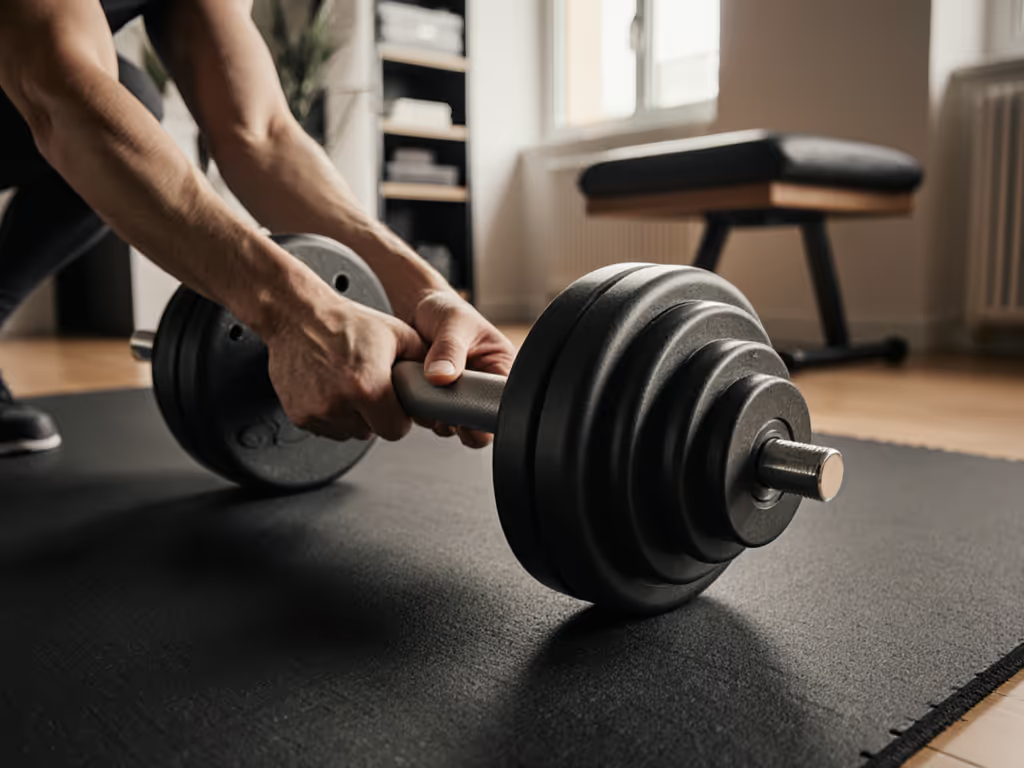
Adjustable Dumbbell Safety: Secure Home Gym Workouts
Practical, evidence-informed guidance to reduce noise, protect joints, and prevent mishaps when training with adjustable dumbbells at home. Follow clear checks and techniques for handle selection, smart loading, and silent set-downs to keep workouts safe and sustainable.
Ownership: Care, Safety & Space Management
Compact Dumbbells: Space-Saving Home Gym Solutions
Build a frictionless, apartment-friendly dumbbell setup with one-hand weight changes, micro-loading, low-vibration cradles, and consistent handle geometry, then follow a 5-minute plan to fit it into your space and schedule.