Dumbbells vs Barbell: Choosing Quiet, Space Smart Strength
By Amara Ncube • 19th Aug
Quick verdict
Adjustable dumbbells are the better fit when space, storage, and a simpler home setup matter most.
- Choose dumbbells if: You want a documented compact storage footprint and exercises such as presses, rows, curls, and goblet squats. REP QuickDraw is listed from 5 to 60 pounds per dumbbell, depending on configuration. View on Amazon
- Choose a barbell if: Squats, bench presses, deadlifts, cleans, or snatches are priorities and your room can support the complete Olympic setup. Safety arms are highly recommended for solo rack training.
- Main trade-off: Dumbbells simplify storage but do not eliminate noise or load limits. Barbells offer a broader system for barbell movements but require substantially more space and equipment.
Important: No comparable independent noise testing or controlled evidence proving either category universally better for muscle or strength development was collected. Treat quietness as setup-dependent, not guaranteed.
The dumbbells vs barbell decision is really a space, noise, and setup decision for small homes, not a contest to crown one universally superior tool. The most recommended home gym equipment is the equipment that fits your room, your loading needs, and the way you train alone. If you share walls, floors, or schedules, start by comparing the full footprint and operating routine, not just the weight on the label.
I learned this the hard way while sharing a ceiling with a cafe: a clank that seems minor from inside your room can become somebody else's evening problem. Every dollar should buy quiet, durability, and real progress.
The short answer: choose the system that solves your constraint
Choose an adjustable-dumbbell setup when you want a documented compact storage footprint and want to use exercises such as presses, rows, curls, and goblet squats without building a typical rack-based Olympic setup.
Choose a barbell system when your plan specifically calls for barbell movements and you have room for the complete arrangement: bar, Olympic plates, clips, and, depending on your training, a bench and a built-in rack, squat rack, or power rack. For solo rack training, safety arms are strongly recommended.
That distinction matters. A bar is not the whole purchase. Likewise, a pair of adjustable dumbbells is not automatically right for every goal. The practical winner is the option that you can store, set up, load, and use consistently without creating a household problem.
The best setup is the one that disappears into daily life except when it is time to train.
Comparison at a glance
| Decision factor | Adjustable dumbbells | Barbell system |
|---|---|---|
| Storage reference | REP QuickDraw cradle: 20.6 by 8.45 inches | A full-rack setup typically requires 6-8 feet of width, plus overhead clearance |
| Loading approach | Weight changes through the product's adjustment mechanism | Bar, Olympic plates, and clips; a setup may also include a bench and rack |
| Documented load example | QuickDraw is listed from 5 lb up to 60 lb per dumbbell, depending on configuration | The Ohio Bar is a 20 kg multipurpose bar designed for squat, bench press, deadlift, clean, snatch, and related movements |
| Solo-use issue | Assess the specific exercise and your room as usual | Safety arms are highly recommended for solo training in a rack |
| Noise evidence available | REP says QuickDraw is not completely silent but is designed for minimal noise | Rubber-coated plates are described as making less loading/unloading noise than cast iron; no comparable full-system decibel data were collected |
This is a planning comparison, not a claim that one category produces better training results. There is no collected controlled evidence here that makes dumbbells or barbells universally better for muscle gain or strength development.
Space saving weight training: measure the system, not the headline
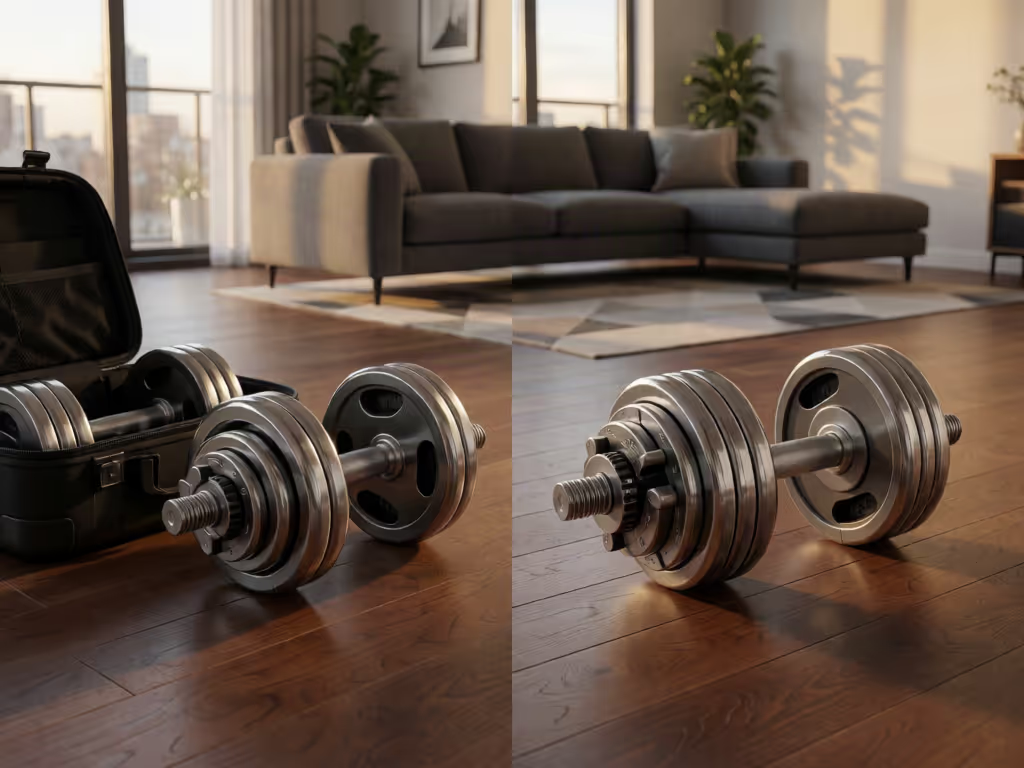
For small-room buyers, space-saving storage analysis and dimensions are more useful than a vague promise of "compact." The REP QuickDraw Adjustable Dumbbell has a stated cradle footprint of 20.6 by 8.45 inches. In its 60-pound configuration, each dumbbell is listed at 18.5 inches long. Those are useful numbers because they let you tape out the storage zone before spending money.
REP's listed options run from 5-30 to 5-60 pounds per dumbbell. Because configurations and availability can change, confirm the current option, expansion path, and warranty terms before buying.
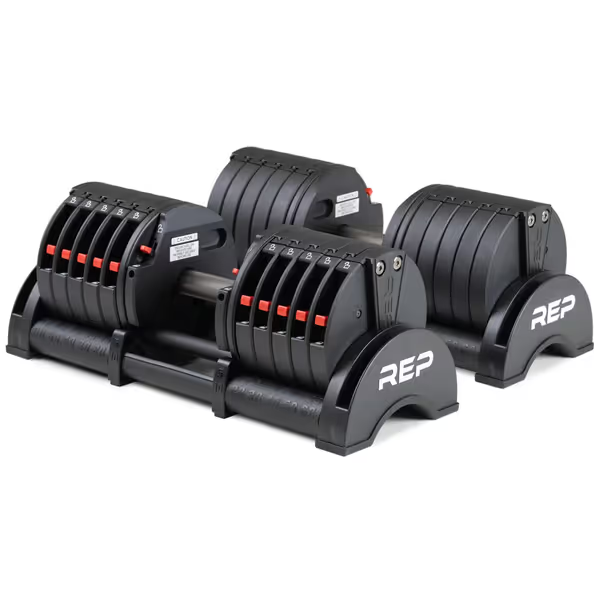
REP Fitness Quickdraw Adjustable Dumbbells
Compact, durable adjustable dumbbells with rapid weight changes and micro-adjustments.
$575.99
Weight Range5-60 lbs (2.5lb increments)
Weight Range5-60 lbs (2.5lb increments)
Pros
Rapid weight changes with simple flip switches.
Steel-reinforced for extreme durability and drop-tested.
Space-saving design, fits tight workout areas.
Cons
Lifetime warranty excludes normal wear and tear.
Requires careful use to prevent damage from consistent drops.
Customers praise their ease of use, solid construction, quick adjustments, and small footprint, calling them a worthwhile investment.
Customers praise their ease of use, solid construction, quick adjustments, and small footprint, calling them a worthwhile investment.
By contrast, a typical Olympic barbell-and-bench arrangement can include a 2-inch-sleeve barbell, Olympic plates, clips, bench, and a built-in rack, squat rack, or power rack. A full-rack setup typically needs 6-8 feet of width plus overhead clearance. That does not make it a poor choice; it means the room must earn it.
Bar length is also a real space-planning figure. Rogue lists its Black Oxide Ohio Bar at 86.75 inches long. The standard 20 kg REP Colorado Bar was reported at 86.6 inches long. If that length conflicts with a narrow room, REP's separate Colorado Short Bar is listed at 72 inches; it is a distinct 15 kg variant and should not be treated as the same specification set as the standard Colorado Bar. REP says the Short Bar is rackable on standard 47-inch and 49-inch-width racks.
Here is the thrifty rule: do not buy a rack because a barbell looks like the "serious" option, and do not buy a quick-adjust pair because it looks tidier. Tape the intended storage area and the training area on the floor. Include the path needed to carry and return equipment. If the plan works without turning your home into a permanent obstacle course, you have created a space dividend.
Noise: distinguish plate clank from building vibration
Apartment noise comparisons show why noise anxiety is sensible, especially in apartments. But the evidence does not support a clean ranking such as "this setup is quiet" or "that setup is safe for thin floors." No independent, comparable decibel testing was collected across adjustable dumbbells, barbells, plates, floors, and dropping practices.
What you can say with confidence is narrower:
- REP states that tight tolerances in QuickDraw are intended to allow minimal noise, while also stating the dumbbells are not completely silent.
- For barbell plate handling, rubber-coated plates are described as making less noise during loading and unloading than cast-iron plates.
- REP says composite bushings on its Colorado Short Bar provide a dampening effect intended to help reduce noise when dropped. That is a manufacturer claim about the bar, not a measured result for a full barbell, plate, and flooring system.
Use that information to set expectations, not to make promises to a downstairs neighbor. The available evidence is limited to those product and plate-material statements.
For a quiet-home plan, choose plate materials with loading noise in mind. If your lease or building is sensitive, do not assume a product page can answer for your home.
Barbell exercises vs dumbbell variations: buy for the work you will actually do
The cleanest way to choose is to write your intended movements first.
When dumbbells map neatly to your routine
REP gives presses, rows, curls, and goblet squats as QuickDraw exercise examples. For someone planning those movements in a compact room, the stated 5-to-60-pound-per-dumbbell range may be more relevant than a larger system footprint. The adjustment method uses Lock-N-Load steel switches, which REP says can be flipped individually or together. REP describes 5-pound standard adjustments using both 2.5-pound micro-adjustment plates; one plate can make a 2.5-pound adjustment with a small imbalance.
That is the useful question for progression: are those increments and the available weight ranges appropriate for the exercises you expect to repeat? Do not assume an adjustable pair will suit every future lift just because it handles your current ones.
When a barbell setup maps neatly to your routine
Rogue designates the Ohio Bar as a multipurpose barbell for squat, bench press, deadlift, clean, snatch, and related movements. Its Black Oxide version is listed at 20 kg with a 28.5 mm shaft, 16.40-inch loadable sleeves, and compatibility with Olympic-spec plates with 2-inch center openings.
The independently tested standard 20 kg Colorado Bar was used in rack squats, overhead drops, and heavy deadlifts. Again, that tells you what was tested, not that every home or every solo lifter should copy those uses.
A barbell becomes the more coherent choice when those bar-specific movements are central to your plan and your room can safely accommodate the system around them. This is where solo lifting safety at home matters most: if you train alone in a rack, make safety arms part of the plan rather than an optional later purchase.
Durability and total-cost thinking
Simple systems with common, understandable parts tend to appeal to me. They are easier to live with than elaborate gear that needs special handling. Still, use the warranty and construction details as decision inputs, not as proof that a product will never fail.
REP states that QuickDraw carries a lifetime warranty for the original purchaser against defects in material, functionality, and workmanship, with exclusions. Rogue states a lifetime warranty against construction and bending for the Black Oxide Ohio Bar. REP rates the separate Colorado Short Bar at a 1,500-pound static rating; that number does not apply to the standard Colorado Bar or the Ohio Bar.
For beginner home gym equipment, the first purchase should therefore be a plan, not a brand:
- Measure storage and active training clearance. Record the actual usable width, ceiling clearance, and route from storage to workout area.
- List the movements you intend to perform. Separate "would be nice" from "will do three times a week."
- Identify the required ecosystem. A barbell plan may include plates, clips, bench, rack, and safety arms; price and store the whole system, not only the bar.
- Set a noise rule. Decide in advance that equipment is placed down under control and that you will not treat unmeasured "quiet" claims as building-specific guarantees.
- Check current terms before checkout. Confirm configuration availability, warranty exclusions, delivery conditions, return logistics, and replacement-part access directly with the seller.
This long-term value approach avoids the expensive middle ground: buying a partial barbell system that cannot be used as intended, or buying a compact dumbbell pair whose maximum load or increments do not match your routine.
A calm, decisive recommendation
For dumbbells vs barbell, do not ask which is "better." Ask which constraint is non-negotiable.
- If a compact, measurable storage zone and the listed dumbbell exercise options fit your plan, an adjustable pair such as QuickDraw is a reasonable product to investigate. Its 20.6-by-8.45-inch cradle footprint, 5-to-60-pound listed range, and stated lifetime warranty make the tradeoffs concrete.
- If barbell squats, bench presses, deadlifts, cleans, or snatches are central to your program, plan for a bar, Olympic plates, clips, and the room to use them. If you train alone in a rack, safety arms are highly recommended.
Neither route deserves an upsell beyond what your room and training actually require. The right setup is durable enough to keep, quiet enough to coexist with, and compact enough that it does not ask for attention between sessions.
Further exploration: make the decision on your floor
Before choosing, tape out a QuickDraw-sized storage rectangle and the likely barbell-and-rack zone in your own room. Then write down your next six months of planned exercises and the maximum weight range you realistically need. That small audit will reveal whether your best next purchase is a compact adjustable pair, a properly planned barbell system, or simply more time training with what you already own.
Used-market gear can be worth considering when condition, compatibility, and return limitations are clear.
Related Articles